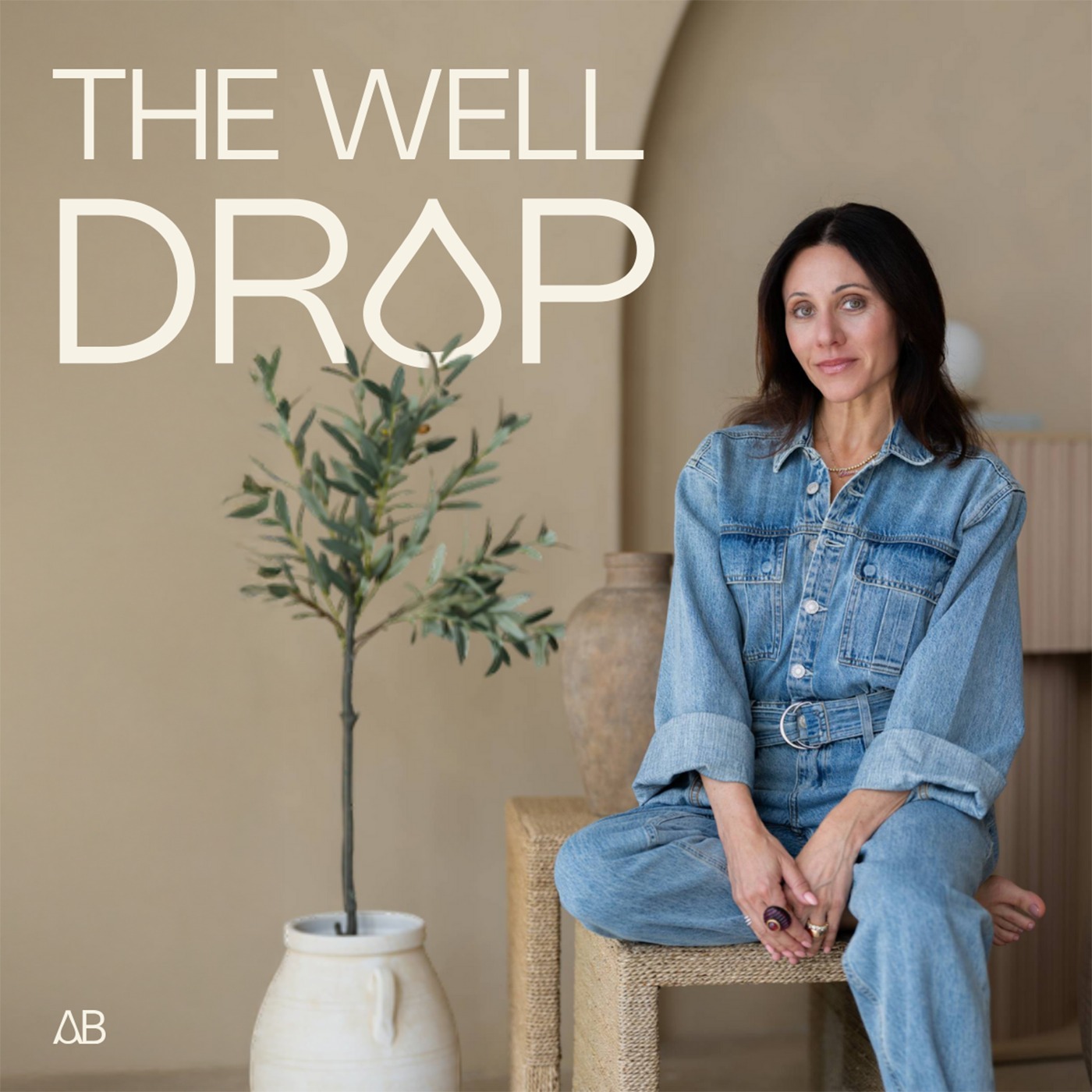
It Was Never ‘Mommy Brain’: Why You Cannot Remember Your Best Friend’s Kid’s Name
About this episode
Have you ever walked into a room and completely forgotten why you went in there, or blanked on the name of someone you have known for years and thought, “What is wrong with me?” It is easy to laugh it off as “mommy brain,” being scattered, doing too much, or just getting older. I did that too, until the forgetting started happening in ways I could no longer brush aside.
For me, it started with objects. Then words. Then names. And girl, when you suddenly cannot remember the name of your best friend’s kid, someone you have known for years, it hits differently. What I did not realize at first was how many little ways I had learned to cover for it, to laugh it off, let someone else fill in the blank, or work around the fact that my recall was changing.
In this solo episode of The Well Drop, I am talking about the side of perimenopause women do not talk about enough: recall loss. I am sharing the moment I knew this was no longer something I wanted to dismiss, what I learned after years of tracking my own hormones, why I chose HRT even when my standard blood work looked “normal,” and the simple things I want every woman in midlife to start paying attention to now.
What’s Discussed:
(0:05) Why “mommy brain” may be the wrong explanation for what is happening to your memory.
(3:17) The 3-stage pattern of recall loss most women do not know about.
(5:57) The airport mistake that made me realize this was more than ordinary forgetfulness.
(10:30) How my recall went from taking half a day to coming back within seconds.
(18:23) 3 ways I would start supporting my brain in midlife.
(22:11) Why changing hormones can change how your body responds to the exact same food.
(31:05) How you can drop hard from your own baseline and still fall inside the “normal” range.
Sign up for The Well Drop Newsletter
Check out The Well Drop approved products and brands at amberberger.me/products
Find out more about Amber Berger:
Website: thewelldrop.com
Instagram: @thewelldrop
THE WELL DROP
[SPEAKER_01]: Here's something I know about you. [SPEAKER_01]: You are not short on information and you definitely know a lot. [SPEAKER_01]: Yet, you're still not feeling the way you want to feel. [SPEAKER_01]: That's not a U-problem. [SPEAKER_01]: That's a foundation problem. [SPEAKER_01]: And here's the reality. [SPEAKER_01]: There has never been a clear roadmap for this chapter of midlife. [SPEAKER_01]: Until now, I built the well-drop because I was hired of piecing it together, too. [SPEAKER_01]: I was tired of
[SPEAKER_01]: protocols that were never built for this body at the stage in the season of life. [SPEAKER_01]: So I built the roadmap every Sunday, one drop lands in your inbox, one habit, one clear upgrade, just for where you are right now. [SPEAKER_01]: No noise, no overwhelmed, just what actually moves in needle. [SPEAKER_01]: You don't need more information, you need to build a wellness lifestyle for mid-life. [SPEAKER_01]: That's it. [SPEAKER_01]: Subscribe at theweljoff.com or click the link in the show notes right now before this [SPEAKER_01]: you forget.
[SPEAKER_01]: I'll see you inside.
[SPEAKER_02]: Hello and welcome to The Wild Drop with me, Amber Berger, a podcast for Wellness Meet Simplicity, empowering you to own your wellness, starting at home. [SPEAKER_02]: Each episode we dive into things we wish we were warned about and explore practical street forward strategies designed for busy bees like you. [SPEAKER_02]: Whether you're juggling meetings, running errands, or managing family life, I'm here to help sift through the noise and show you how integrating wellness into your daily routine can be simple and stress-free.
[SPEAKER_02]: find out how by tuning in to today's well-drop.
[SPEAKER_02]: Tell me if this sounds like something that's familiar to you. [SPEAKER_02]: Your mid-sentence in a meeting and the words just disappear. [SPEAKER_02]: It's not a stumble, but a blank space of where the words should be. [SPEAKER_02]: And then everyone is waiting for you to say what it is. [SPEAKER_02]: And you just, you can't come up with it, it's a blank. [SPEAKER_02]: or you're at a party and you have to introduce two people, you've known them for 15 years each, you know their faces, you know their names, it's right there on the tip of your tongue, you remember one of the names and the other one you absolutely blank in the moment.
[SPEAKER_02]: And the name is just gone. [SPEAKER_02]: Or have you put your sunglasses down and you lose them in the same room, you call your daughter by your sister's name, are you walking to the kitchen and standing there wondering like
[SPEAKER_02]: If you've been told by everyone including yourself that this is mommy brain and that you're scattered, that you're doing too much, this is just what like the 40 something looks like I want to tell you what I believe after living this for many years, I am 46 years old. [SPEAKER_02]: And there is a way to do something about it. [SPEAKER_02]: Your brain is not broken, it's not just aging, you're not becoming a less capable version of yourself. [SPEAKER_02]: So you don't have to accept it.
[SPEAKER_02]: What is happening is that your hormones that your brain runs off of are starting to shift. [SPEAKER_02]: And in adult life, it starts to drop. [SPEAKER_02]: And the dropping is a pattern that makes the recall one of the first things to go. [SPEAKER_02]: mental recall, that's not the symptom that is what this whole episode is about. [SPEAKER_02]: In this episode, you're going to learn one, the exact progression of curry menopause recall loss, and why it starts with objects and ends in names.
[SPEAKER_02]: Number two, why mommy brain is a most expensive joke, us women tell ourselves all the time. [SPEAKER_02]: Number three, what happened at my kitchen table this morning that proved my husband absolutely had no idea what's been going on in my brain the last five years. [SPEAKER_02]: Number four, why 10 years of my own testing of my data caught this before my blood work did, and what normal range actually may mean. [SPEAKER_02]: And number five, three things that you can do this week, not some day, but this week to help your brain in midlife so that you can thrive in this chapter.
[SPEAKER_02]: Welcome to the wild drop. [SPEAKER_02]: I am Amber Berger. [SPEAKER_02]: I sift through the wellness noise, so you don't have to let's drop into it. [SPEAKER_02]: Today we are doing a solo episode because I want to discuss personal experience stories. [SPEAKER_02]: And I think we learned best when you hear from somebody who has lived it, who knows it, and also did something about it. [SPEAKER_01]: But most people don't know is that recall loss in perimenopause, it's not random and it can move in stages.
[SPEAKER_02]: I like to think of it as three different stages. [SPEAKER_02]: And once you see the stages, you can kind of place yourself in them on a map. [SPEAKER_02]: So stage one is about objects. [SPEAKER_02]: It starts with like missing your keys or your sunglasses or your phone. [SPEAKER_02]: This is where it started for me. [SPEAKER_02]: I was searching for my phone while I was actually holding my phone. [SPEAKER_02]: Or maybe it was just sitting in my back pocket. [SPEAKER_02]: My kids turned into it as like a joke of oh mom.
[SPEAKER_02]: There she goes again. [SPEAKER_02]: Can't find her phone. [SPEAKER_02]: Can't find her keys. [SPEAKER_02]: I had a moment when I couldn't find my sunglasses and then I looked in the mirror and they're sitting right on top of my head. [SPEAKER_02]: I let them poke fun of it because being funny is a good alternative to being sad. [SPEAKER_02]: But this stage, it's sort of easy to dismiss thinking that it's parrymenopause. [SPEAKER_02]: I never linked it to parrymenopause. [SPEAKER_02]: I just assumed it was having two kids and this is what mommy brain is.
[SPEAKER_02]: because everyone loses their keys, right? [SPEAKER_02]: But this is a trap, and this is a stage that might be designed to get missed. [SPEAKER_02]: Stage two is when the words start to shift. [SPEAKER_02]: This is what the one that actually started to scare me, but I'm a big conversation. [SPEAKER_02]: The words that I need all of a sudden just don't arrive. [SPEAKER_02]: I know the concept, I know the shape of the word. [SPEAKER_02]: I know what letter it may start with, but it's just not coming, and I'm sitting across from a friend or standing in a meeting, and I have, [SPEAKER_02]: to deal with this in real time.
[SPEAKER_02]: That was the moment for me that I realized, okay, this isn't just mommy brain. [SPEAKER_02]: My kids were no longer babies. [SPEAKER_02]: There was nothing about my life that dramatically changed, but something in my body clearly was changing and not for the better. [SPEAKER_02]: Stage 3 is [SPEAKER_02]: the names. [SPEAKER_02]: And the names is when it starts to really become jarring. [SPEAKER_02]: This is a stage that gets women sometimes to stop leaving the house, like you're part of from many women.
[SPEAKER_02]: They're embarrassed to go into social situations because they're nervous of what's going to happen, of what blanks they're going to form. [SPEAKER_02]: They don't want to feel like they look like an idiot. [SPEAKER_02]: And maybe this is why in the movies, women in their 50s, they kind of get viewed as kind of like
[SPEAKER_02]: But the issue with the names is that it's not even about the names of strangers. [SPEAKER_02]: There's some are all in school, we're all meeting so many new people. [SPEAKER_02]: So I always say, I'll totally remember your face. [SPEAKER_02]: I'll never forget a face, but your name, not sure. [SPEAKER_02]: But I'm talking about the names of your best friends. [SPEAKER_02]: Names of your best friends, kids, that you have grown up with now. [SPEAKER_02]: It could be over a decade, 10 years, 15 years.
[SPEAKER_02]: I mean, childhood friends. [SPEAKER_02]: These are names of the people that you love. [SPEAKER_02]: This happened to me. [SPEAKER_02]: actually just recently and this is why I wanted to talk about it today because the recovery window is possible and when this starts to happen for me, this was the sign, even before that. [SPEAKER_02]: So really it was like the objects, I'll get into the story in a minute, but then the names is when it's like a low moment. [SPEAKER_02]: So I'm going to tell you a little story about what made me realize that it was not mommy bringing anymore and this was something I need to take care of was about a year and a half ago and my mental recall was getting past the point of like, oh, forgetting my sunglasses that were sitting on my head.
[SPEAKER_02]: I actually had an experience where I went to a conference for work, and I am a former jeweler, so I put my jewelry away in the safe. [SPEAKER_02]: I woke up early this morning. [SPEAKER_02]: I was going, I went to the gym. [SPEAKER_02]: I nursed myself with an amazing practice. [SPEAKER_02]: I had my stuff all packed, I was ready to leave. [SPEAKER_02]: I was actually leaving for the airport early, and I'm a person who guns it, like leaves it till last minute. [SPEAKER_02]: and I was so proud of myself for having a nursing woman mourning for myself.
[SPEAKER_02]: I get to the airport and as I'm walking into the TSA line, I realize, oh my god, I just left. [SPEAKER_01]: All of my jewelry in the safe. [SPEAKER_02]: This was alarm bells off like how in the world could I have done that? [SPEAKER_02]: Like I was, I wasn't even rushed. [SPEAKER_02]: I like was totally organized and prepared for my day. [SPEAKER_02]: I was so proud of myself and I literally wanted to cry. [SPEAKER_02]: So I respect to the hotel, got my jewelry, respect to the airport, luckily was able to make my flight and this was an old ship moment for me.
[SPEAKER_02]: And this was a moment where I was like, okay. [SPEAKER_02]: This isn't Mommy Brain. [SPEAKER_02]: I need to do something, and I immediately put myself on HRT. [SPEAKER_02]: And this was where doctors, this was before the warning box label, got removed from estrogen, and there's been so much fear around estrogen, which we'll get into at another episode. [SPEAKER_02]: But that was my moment in tandem with tests that I liked around called the Dutch test. [SPEAKER_02]: I saw that my body was in the Perry Menopausal State, but my blood didn't match it.
[SPEAKER_02]: you any hormones, unless you were having hot flashes. [SPEAKER_02]: That was sort of their rule. [SPEAKER_02]: And I went to like at least three different female specialists, kind of colleges, who wouldn't. [SPEAKER_02]: And I said, I know from the Dutch test six months apart, my hormones, although this just happened to me, I need something. [SPEAKER_02]: And I luckily found a company that did it. [SPEAKER_02]: But what was really interesting is I just had an incident this morning with my husband.
[SPEAKER_02]: And I realized that he actually besides this episode with my jewelry and what just happened today, which I'll tell you in a minute, you really had no idea what I've been like living with for a long time. [SPEAKER_02]: And we're very closely married almost 20 years, we grew up together, we're technically high school sweethearts. [SPEAKER_02]: Nobody knows me better than my husband, and it was kind of an interesting eye-opening moment for me to realize like, wow, [SPEAKER_02]: he didn't understand what's going on was I maybe hiding it was I like quite recovering up for it because I didn't want to seem like an idiot in his eyes because he definitely thought I was an idiot this morning.
[SPEAKER_02]: So basically [SPEAKER_02]: I will tell you what, the most expensive joke on women today is our mental recall. [SPEAKER_02]: And it's not about the symptoms. [SPEAKER_02]: It's about that. [SPEAKER_02]: Maybe we're covering it up and don't even realize it because we're just so good at it. [SPEAKER_02]: And so this is a good conversation to have to maybe sort of like check yourself to make sure that you're not covering it up too because I realize maybe that's what I've been doing that my husband had no idea how much my brain was really lagging.
[SPEAKER_02]: And now I've been on hormones a year and a half that for me my recall is faster than ever before hormones My recall sometimes could take me a day or so and now being on hormones it can happen within seconds So for me this is a huge win. [SPEAKER_02]: I'm like wow [SPEAKER_02]: I'm like recalling faster than ever, it's not taking me a half a day or a full day for it to come back to me like it's coming back fast. [SPEAKER_02]: I think that's great, but I realize that he didn't even have a clue of how much recall I maybe have been struggling with for a while.
[SPEAKER_02]: So if you're someone who may be stopped using names and you may be instead to say, hey, you or a high-hunter, how's your husband or how's your sister because you don't want to expose that you don't know their names. [SPEAKER_02]: If you have been describing a person and instead of naming them, you let people sort of finish your sentences or helping with the introductions of people because I do that a lot. [SPEAKER_02]: Um, if I know one person's name, I kind of delay introducing the second so that they introduce themselves.
[SPEAKER_02]: If you laugh at yourself and say, oh, I'm just so scattered today and you say it as if like it's a personality treat instead of a symptom. [SPEAKER_02]: If you're like me, I write everything down. [SPEAKER_02]: I have to live by my calendar. [SPEAKER_02]: I realize that I was always a very organized person with my calendar, but now my calendar is my life. [SPEAKER_02]: I say my whole family knows it. [SPEAKER_02]: If it's not in my calendar. [SPEAKER_02]: It's not going to happen and maybe I should have realized sooner or like, oh well, I need some mental brain support and that estrogen is linked to your brain.
[SPEAKER_02]: So maybe my brain needs some hormones.
[SPEAKER_01]: I'm taking a quick moment to share something with you because the number one question I get asked is where do I even start lucky for you you don't have to figure that out because I already did the work for you and I've built it over the last 10 years it's called the well drop blueprint. [SPEAKER_01]: No prep, no planning, just open your email every morning for 14 days and get one habit, one clear upgrade that tells you exactly what to do that day. [SPEAKER_01]: That's it. [SPEAKER_01]: Here's your permission slip.
[SPEAKER_01]: It's never too early and it's also never too late to start. [SPEAKER_01]: The women doing this right now range from the early 30s to their 80s because building is solid wellness foundation works at every age. [SPEAKER_01]: And the sooner you start, the faster you will feel the difference. [SPEAKER_01]: The reality is, women are doing great things, but off a Iraqi foundation. [SPEAKER_01]: The blueprint is your starting point. [SPEAKER_01]: It's simple, it's clear, and delivered to your inbox.
[SPEAKER_01]: Go to the wilddrop.com right now or click the link in your show notes. [SPEAKER_01]: Open to mouse email. [SPEAKER_01]: It's your starting point to building a wellness foundation that helps make everything else you do work better. [SPEAKER_01]: Upgrade your wellness right now.
[SPEAKER_02]: I started it at 45. [SPEAKER_02]: I actually wish I started it at 43. [SPEAKER_02]: So there's so many ways that we're really good at hiding it and the truth is that everyone of us knows the workaround and if you're running through enough workgrounds and the people closest to you never see the problem and this was my eye opening moment this morning. [SPEAKER_02]: because I probably didn't want to show myself as disorganized because I'm not. [SPEAKER_01]: I'm a very organized person and it comes also at a cost.
[SPEAKER_02]: It comes at a cost of maybe you getting yourself support sooner than later, right? [SPEAKER_02]: Because you're sort of like hiding it. [SPEAKER_02]: And we also aren't taught to connect the dots to know. [SPEAKER_02]: that when this starts happening to our brain, it might be a sign that it's our hormones. [SPEAKER_02]: And what's hard is that we really live off of doing our blood labs, which is great, but our blood labs may look normal. [SPEAKER_02]: These are sort of the little signs.
[SPEAKER_02]: I say our body kind of like knocks on the door and gives us some signals. [SPEAKER_02]: It could be your blood sugar, dysregulation, that you don't always happenings, so throw on a glucose monitor. [SPEAKER_02]: If that looks good, then maybe you want to also I always do the Dutch test, a huge fan of the Dutch test that is not recognized by the standard medical system, usually that's more in the functional health space, possibly maybe natural paths or integrative doctors, you'll find a practitioner.
[SPEAKER_02]: who uses the Dutch test and I believe in using both in tandem it's just such a good information and it looks at different pathways of your hormones. [SPEAKER_02]: I want to have women have hoped to know that there are solutions out there that you can see what your body may need but you might need to do a little bit of digging because I know I don't want to be the woman who
[SPEAKER_02]: you're not going to go to an event because you're nervous, you'll have to introduce people. [SPEAKER_02]: These are real measurable costs that are happening to women, and this is not a character flaw. [SPEAKER_02]: This is not the new you. [SPEAKER_02]: There are things that you can do for it. [SPEAKER_02]: So I want to share my story of what happened to me this morning, which was the eye opening moment for me to realize,
[SPEAKER_02]: been hiding my struggles from my own husband and not even realizing it because I am very transparent. [SPEAKER_02]: I mean, I'm sitting around a podcast. [SPEAKER_02]: I'm happy to talk about everything, but maybe I was covering up the degree in which I had been dealing with it and overcompensating with it through new habits. [SPEAKER_02]: So this morning my husband and I were at the kitchen table building a guest list for an event that we're having. [SPEAKER_02]: I have a whole spreadsheet with all the names, adults, kids, everything together.
[SPEAKER_02]: Then I had a meeting with our party planner and it was over the phone. [SPEAKER_02]: I was not looking. [SPEAKER_02]: I'm a very visual person where I need to like look at the list. [SPEAKER_02]: So I was not looking at the list. [SPEAKER_02]: I was actually on my morning dog walk with my husband where we also energize ourselves. [SPEAKER_02]: I tell everyone you want to get energy and sleep like a baby go get your morning sunlight. [SPEAKER_02]: So we were doing that and we were having a conversation over the phone.
[SPEAKER_02]: going through the names of the families, one by one each individual person. [SPEAKER_02]: This is at 7 30 in the morning. [SPEAKER_02]: I was like, wow, okay, we're getting a brain workout early in the morning. [SPEAKER_02]: Let's go. [SPEAKER_02]: And as we started going through it, my husband's just listening, and he started to realize you would have, you know, a couple, two kids, two adults. [SPEAKER_02]: I, of course, named the couple. [SPEAKER_02]: That was very easy for me, but then when it came to the kids, [SPEAKER_02]: I would remember one, and then the other one, I'd be like, the blanks started to happen.
[SPEAKER_02]: And I actually couldn't believe it because I've been saying that my recalls better than ever, which I said earlier, and I wholeheartedly believe it. [SPEAKER_02]: But my husband looked at me. [SPEAKER_02]: I think he thought I was joking. [SPEAKER_02]: And there were a handful of people who are our best friends. [SPEAKER_02]: I know there are kids that are like my children. [SPEAKER_02]: There are family. [SPEAKER_02]: And I couldn't recall their kids' names. [SPEAKER_02]: And all of a sudden, I realized once that happens to you with one or two, you then start to get in your head and start to get nervous.
[SPEAKER_02]: So I started messing up more and more people because I was already insecure about am I going to be able to answer these questions? [SPEAKER_02]: My husband, I saw his eyes look at me, and he really was confused, and I'm going to have to interview him to get his real thoughts on it. [SPEAKER_02]: But I realized in that moment, like, wow, he had no idea how bad it had gone for me, and before I went on HRT, and even before this one incident
[SPEAKER_02]: that this is what women go through. [SPEAKER_02]: And so I want to speak about that because I do have many clients who I work with with the well-joined method that we have helped to support their brain through different things. [SPEAKER_02]: And some of them, we start to get more insulin, don't want to go out as much, don't want to be a social and community and socialization for women like this is our number one. [SPEAKER_02]: Like we need this. [SPEAKER_02]: to for our longevity, to feel good, to feel connected.
[SPEAKER_02]: So this is something I want women to be able to recognize, not make a joke about it, because listen, we can make a joke and it's funny, but I want also someone to take action and understand, what are my options, what are my choices? [SPEAKER_02]: And so one is let's even just maybe talk about it more in real time what's going on so that our family and our people who love us and that are close to us can even understand what's happening because I think it's hard for them to have sympathy for us when they don't even realize that we're actually struggling.
[SPEAKER_02]: So three things that you can do as a woman in midlife to support your brain health. [SPEAKER_02]: First, I suggest get a Dutch test and set a solid foundation and baseline to see where you are, and also have your bloodbubbs. [SPEAKER_02]: And I started doing this at 36. [SPEAKER_02]: I would recommend for every woman at least at 35. [SPEAKER_02]: And it's never too late. [SPEAKER_02]: So I have women who are menopausal. [SPEAKER_02]: I still recommend that you do this, and I'll explain why in a moment.
[SPEAKER_02]: because in addition to just seeing your hormone levels, it also goes into your melatonin, your cortisol, you are such complicated beings. [SPEAKER_02]: It's a full 24-hour picture of how is our hormone cycle working together. [SPEAKER_02]: So I recommend that. [SPEAKER_02]: Number two, an option that can help support. [SPEAKER_02]: We have receptors all over our body from our head to our toe, especially our brain, our gut, estrogen receptors. [SPEAKER_02]: We may not realize that what our body needs is estrogen.
[SPEAKER_02]: And so, I chose for me a bio-identical, estradiol and progesterone. [SPEAKER_02]: I chose one and I feel so lucky that I discovered inner balance. [SPEAKER_02]: It's a telehealth company. [SPEAKER_02]: There's other incredible telehealth companies out there as well. [SPEAKER_02]: that can support your hormones and also because it's how healthy answer all your crazy questions. [SPEAKER_02]: No question is too crazy and it was such an eye-opening moment and I'm rethinking how do I want to care for my body in this next chapter?
[SPEAKER_02]: Because the standard care sometimes you have to wait so long for an appointment. [SPEAKER_02]: I just had to cancel my annual and then wait another four months
[SPEAKER_02]: for longevity. [SPEAKER_02]: That is not sustainable. [SPEAKER_02]: That does not work for me. [SPEAKER_02]: I believe if you find a person that's in person, it can give you everything that you want and great, but I think having a telehealth to support that is even better for me. [SPEAKER_02]: And I can even just go under percent telehealth. [SPEAKER_02]: I'm very comfortable with telehealth and not everybody is, but I like it because you get your questions answered in real time and you can also have an in person conversation too.
[SPEAKER_02]: So that is number two. [SPEAKER_02]: So number one, get a Dutch, just number two, possibly consider HRT and it's in addition all about longevity from a preventative health standpoint. [SPEAKER_02]: So it's great for your heart health, your bone health, your brain health, there's your guts. [SPEAKER_02]: There's so much we're just learning now and the thing is if you are 35 plus we are living and we're not going to have the 20 years [SPEAKER_02]: of luxury, now that hormones is back on the table to wait for all the case studies to catch up, because it's been off the table since 2002.
[SPEAKER_02]: So it's been a very long time. [SPEAKER_02]: And there are other herbs that can help support your brain health. [SPEAKER_02]: There are adaptogens that can support your brain health. [SPEAKER_02]: There are things called bioregulators that can support your brain health. [SPEAKER_02]: There are options. [SPEAKER_02]: I believe in taking at least one step. [SPEAKER_02]: of knowing where your data is and then supporting it from there. [SPEAKER_02]: So get the data first before you start to support your brain health.
[SPEAKER_02]: And one last thing when I was talking about of tools in the toolkit related to data is doing a glucose monitor. [SPEAKER_02]: So a lot of times, if your blood sugar is spiking, and we have no idea because when your hormones start to change, the way your body processes, your food starts to change too. [SPEAKER_02]: But it's not something you always can feel, but it's definitely something that you will see on a glucose monitor. [SPEAKER_02]: Now more than ever, we have these tools that are fingertips.
[SPEAKER_02]: So I want every woman throw on a glucose monitor. [SPEAKER_02]: Do a check in with yourself. [SPEAKER_02]: I'll ask just one time because most people aren't even doing it. [SPEAKER_02]: Don't you don't need diabetes. [SPEAKER_02]: This is the reframe. [SPEAKER_02]: You don't need diabetes to throw on a glucose monitor. [SPEAKER_02]: If you are in midlife and you are 35 plus, you need to check in with your body to see how your body is responding to what you're eating. [SPEAKER_02]: And I always say, is your body screaming at you or is it smiling at you with everything that you're eating?
[SPEAKER_02]: Not even talking about healthy or not healthy. [SPEAKER_02]: It's strictly a functional standpoint. [SPEAKER_02]: How is my body responding blood sugar wise? [SPEAKER_02]: Because when your blood sugar spikes too high, and too high means 50 points in above, because it's normal for our blood sugar to increase when we eat. [SPEAKER_02]: So 50 points in above, that creates inflammation. [SPEAKER_02]: And now if this continues day and in day out, right? [SPEAKER_02]: You're hopefully eating three times a day, at least unless you're fasting.
[SPEAKER_02]: Then that creates inflammation and systemic inflammation. [SPEAKER_02]: This is what creates chronic disease. [SPEAKER_02]: I'm all about connecting the dots. [SPEAKER_02]: I don't like to talk about things when they're already problem. [SPEAKER_02]: I love to try to avoid things ahead of time. [SPEAKER_02]: And we have these great tools in our toolbox. [SPEAKER_02]: And now you can order them online by yourself. [SPEAKER_02]: You can also order it on thewelljup.com. [SPEAKER_02]: You can see my glucose monitor and put one on, see inside, and this is how you start to own your wellness.
[SPEAKER_02]: So let me be clear before I continue. [SPEAKER_02]: I am not your doctor. [SPEAKER_02]: This is my experience. [SPEAKER_02]: And if you work with me and the well-jet method, I can create a protocol specifically to you because we're also different. [SPEAKER_02]: We all need different things. [SPEAKER_02]: I chose to go on hormone therapy before my doctor said I needed it. [SPEAKER_02]: My blood work looked good on paper. [SPEAKER_02]: They thought I was fine. [SPEAKER_02]: Actually, I was with him complimented about my blood work, but I also look a little bit deeper with the Dutch dust, which is dried urine, it reads your hormones and your metabolites.
[SPEAKER_02]: I've been doing it for over 10 years now. [SPEAKER_02]: and I saw immediately when my hormones dropped and I also didn't even respond after the first drop. [SPEAKER_02]: I gave it another six months when and again and the numbers were the same so then I knew okay it was time to do something. [SPEAKER_02]: This is the part I want you here because it's more important than what test I use. [SPEAKER_02]: It's that when you start tracking yourself you start to know yourself and you have to take ownership of your wellness before your wellness starts to own you.
[SPEAKER_02]: It's your job and the doctor's job is to be the expert in the field that they're in. [SPEAKER_02]: Their job is not typically to monitor your whole self because the average system is very segmented into specialist. [SPEAKER_02]: So a mess of their specialty has been in functional and allopathic care, you need to be a charge of you, because nobody lives with your body every single day, you do. [SPEAKER_02]: So no one's going to know you better than yourself. [SPEAKER_02]: And your doctor is there to support you, but I think you put way too much on the doctors.
[SPEAKER_02]: And I feel bad for them that it's our job. [SPEAKER_02]: And so we need to own our wellness first and then have them to be there to help support us. [SPEAKER_02]: So here's what I want most to be to know. [SPEAKER_02]: A normal on a blood panel does not mean that nothing is happening underneath the hood. [SPEAKER_02]: It means that nothing showed up on the test in that medium, which is good, but there are also markers sometimes that are not necessarily run, which can show you what is building up underneath the surface.
[SPEAKER_02]: I was treating my symptoms and that's how they treat you in perimenopause or menopause is based on symptoms. [SPEAKER_02]: The Dutch test for me confirmed that I needed more support and that decision was holy mind. [SPEAKER_02]: No one else to blame my decision, my research, I knew what my body needed. [SPEAKER_02]: I have to say, after being on HRTF within just a month or two, my recall started to come back fast, and I was so impressed. [SPEAKER_02]: I was so relieved to see that something was moving the needle.
[SPEAKER_02]: It didn't take me that long, but sometimes when you get the right thing in the right order, it starts to work for you. [SPEAKER_02]: So today, I want you to celebrate the potential of hope. [SPEAKER_02]: Don't settle. [SPEAKER_02]: This is not the new you that brain health is such a key component in perimenopause and often dismissed. [SPEAKER_02]: That it is way beyond mommy brain, and that you don't want to accept mommy brain. [SPEAKER_02]: You want to get on top of it and support your body now, so they can keep remaining and feeling strong for yourself, for your family, and for everyone that loves you.
[SPEAKER_02]: hormone therapy was off the table for an entire generation of women to our mothers did not go through this chapter the way we are it's back on the table now the conversation has changed whether it's right for you is a conversation between you and a provider who specializes in this. [SPEAKER_02]: I would also recommend you find a specialist who's been working with hormones. [SPEAKER_02]: Remember [SPEAKER_02]: hormones have been off the table since 2000 too. [SPEAKER_02]: So make sure you start asking the right questions with the person that you're going to to know that they have studied hormones outside because this is not really taught in school anymore, so they need to seek [SPEAKER_02]: higher education and that they have actually been working with it for a handful of years so that you are not the guinea pig.
[SPEAKER_02]: If you want and your curse about the BIO identical hormones I chose for my body, you can go listen to my episode with Dr. Sarah Deckerett. [SPEAKER_02]: She was wonderful when I discovered it, I just said this is like the most amazing thing and I need to share it with more people. [SPEAKER_01]: So here is your permission slip, do these three things in the next seven days. [SPEAKER_02]: Number one, you're going to time your gap. [SPEAKER_02]: Next time, a name or word goes a blank without you.
[SPEAKER_02]: How long to take you to recall it? [SPEAKER_02]: Does it take minutes? [SPEAKER_02]: visit take hours, just take a day, write it down in your notes tab in your phone because that is the number that becomes your baseline and it's a single, most useful thing to bring to an agreement. [SPEAKER_02]: Just saying I have brain fog is too vague. [SPEAKER_02]: Instead, you can come up and say, my word recall gap is for hours and this becomes a better conversation. [SPEAKER_02]: You want to bring one question with you, what else can you run besides my blood labs so that you can see your numbers over time.
[SPEAKER_02]: If your lab comes back normal, but your symptoms don't, don't let that be the end of the conversation. [SPEAKER_02]: Start your own record now and in five years you're going to have something that nobody can hand you today. [SPEAKER_02]: Number two, stop running the workarounds for one week. [SPEAKER_02]: When the name goes, say it out loud, say, I've lost the name, give me a minute. [SPEAKER_02]: Don't cover it up, don't choke, don't let someone else fill in the gaps. [SPEAKER_02]: This may feel terrible, but do it anyways, because you cannot get help for symptom that you're performing your way around.
[SPEAKER_02]: And I realize that I must have been performing my way around, because my husband didn't even realize what I struggle with. [SPEAKER_01]: Number three, give your partner real information. [SPEAKER_02]: Three sentences say, this is not a lecture. [SPEAKER_02]: This is not an apology. [SPEAKER_02]: Say, when I go blank on a name, this is not meeting scattered. [SPEAKER_02]: So I want you to tell your partner this because they don't understand what we go through saying, when I go blank on a name, this is not meeting scattered.
[SPEAKER_02]: It's a hormonal symptom and it's better than it was.
[SPEAKER_02]: That's it. [SPEAKER_02]: And if you're a kids who've been making joke, give them the same three sentences. [SPEAKER_02]: You know, say that you own it. [SPEAKER_02]: You take responsibility for it so that they know it's not a joke and that this is you working on something. [SPEAKER_02]: Sometimes, needs to see our weaknesses. [SPEAKER_02]: So, [SPEAKER_02]: Recall loss moves in stages, objects, words, names, this is the stage that I realize and broke it down to covering it up will keep you undiagnosed, not help you get the symptom relief sooner.
[SPEAKER_02]: And the recovery gap is a number that matters the most, not the fact that you forgot. [SPEAKER_02]: So start tracking. [SPEAKER_01]: Normal is built for the average population on a blood bag. [SPEAKER_02]: You can drop hard from your own baseline and still land inside normal on blood. [SPEAKER_02]: So track yourself and don't allow someone else to track you. [SPEAKER_02]: The people closest to you that are living with you, they need to understand what you're going through. [SPEAKER_02]: So, report back, take notes, and this is the drop.
[SPEAKER_02]: You are not doing this the way your mother's did or your grandmother's. [SPEAKER_02]: We have a completely different environment. [SPEAKER_02]: The toxic load that our bodies are carrying is not what they carry. [SPEAKER_02]: So, we're going to go through this very differently. [SPEAKER_02]: This means that we don't get to inherit their playbook, we're writing ours in real time. [SPEAKER_02]: And when the generation that names it out loud, which is us today, ladies, the women behind us, don't lose a decade calling it mommy-brain and laughing their way through it outside the kitchen table.
[SPEAKER_02]: These are the tools in your toolbox, Harmel and Therapy was one of mine, and may or may not be one of yours, but you deserve to know that the toolbox exists. [SPEAKER_02]: So if this landed, send it to a friend, send it to your partner, because they all need to know what we're going through. [SPEAKER_02]: And come and tell me your stories. [SPEAKER_02]: You can message me at a Starbucks on Instagram, tell me your number. [SPEAKER_02]: I read every single one. [SPEAKER_02]: You got this, I got you, Amber.
[SPEAKER_00]: The well-drop podcast and content posted by Amber Burger and DinoWisma is presented solely for general informational, educational, and entertainment purposes. [SPEAKER_00]: The use of information on this podcast or materials linked from this podcast or website is at the user's own risk. [SPEAKER_00]: It is not intended as a substitute for the advice of a physician, professional coach, psychotherapist, or other qualified professional, diagnosis, or treatment. [SPEAKER_00]: Users should not disregard or delay in obtaining medical advice for any medical or mental health condition they may have and should seek the assistance of their health care professionals for any such conditions.
[SPEAKER_00]: This podcast is for informational purposes only and should not be considered health advice. [SPEAKER_00]: The well-drop is not responsible for any losses, damages, or liabilities that may arise from the use of this podcast.
 Apple Podcasts
 Castbox
 Castro
 Goodpods
 Moon FM
 Overcast
 Pocket Casts
 Podbean
 Podcast Addict
 Podcast Republic
 Spotify