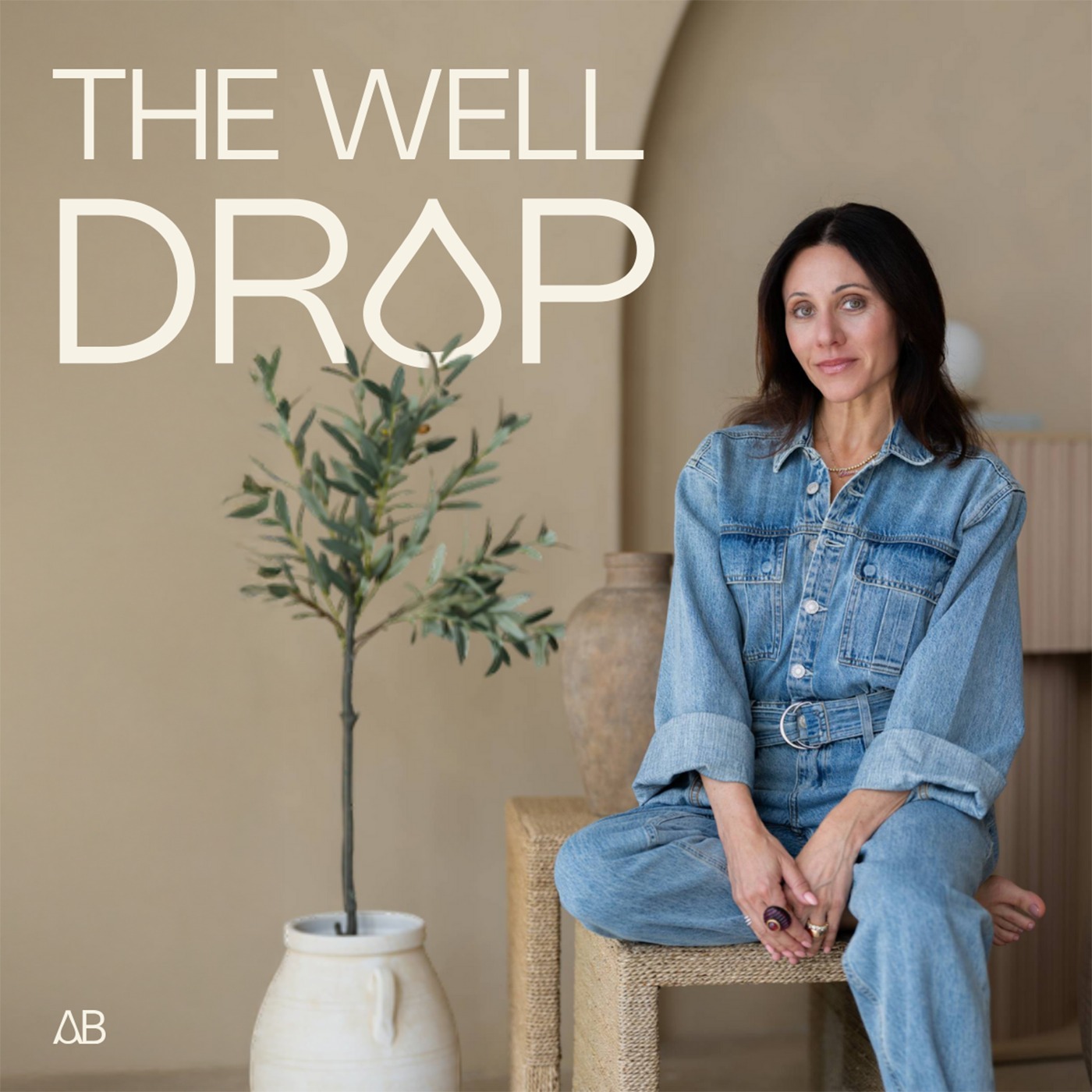
Joint Pain After 40 With No Injury? Where It Starts | Brian Burzynski (Episode 135)
About this episode
Has this started happening in midlife? A knee suddenly hurts. Your hip feels different. You wake up with a stiff neck and cannot point to anything you actually did. It is easy to blame age when pain seems to come out of nowhere, but what if what you are feeling today has a history you have not connected to it yet?
In this episode of The Well Drop, I sit down with Brian Burzynski, founder of Intelligent Threads, to talk about the patterns he has seen after 25 years of working hands-on with the body and why pain is not always as straightforward as we assume. We get into old injuries, repetitive movement, the way the body adapts over time, and the clues that may be worth looking at before you decide a new ache is simply part of getting older.
Then the conversation goes somewhere I did not expect. Brian took what he learned from working with the body and turned it into a wellness technology built directly into clothing and bedding. No battery. Nothing to charge. It looks completely ordinary. I had already experienced the demo myself, so I wanted answers: what exactly is happening, why put it into a T-shirt, and could something you already wear or sleep on become part of your wellness routine without adding another thing to your day?
What’s Discussed
(08:48) Why pain can suddenly feel different in midlife, even when there was no big injury.
(09:18) The mistake we make when we assume pain has to begin where we feel it.
(10:19) What an old injury or repetitive movement may still be doing years later.
(11:23) The hidden tension Brian looks for when pain seems to have no obvious explanation.
(13:17) The moment this conversation shifts from body mechanics to a technology built into a regular T-shirt.
(16:23) The demo Amber tried that made her want a much better explanation.
(21:34) Why the hours you already spend sleeping became one of the most interesting parts of this conversation.
If your first reaction is “wait... how is a shirt supposed to do that?” That is exactly why I wanted this conversation.
Sign up for The Well Drop Newsletter
Check out The Well Drop approved products and brands at amberberger.me/products
Find out more about Amber Berger:
Website: thewelldrop.com
Instagram: @thewelldrop
Find out more about Brian Burzynski + Intelligent Threads:
Website: intelligentthreads.com
THE WELL DROP
[SPEAKER_02]: Here's something I know about you. [SPEAKER_02]: You are not short on information and you definitely know a lot. [SPEAKER_02]: Yet, you're still not feeling the way you want to feel. [SPEAKER_02]: That's not a U-problem. [SPEAKER_02]: That's a foundation problem. [SPEAKER_02]: And here's the reality. [SPEAKER_02]: There has never been a clear roadmap for this chapter of midlife. [SPEAKER_02]: Until now, I built the well-drop because I was hired of piecing it together, too. [SPEAKER_02]: I was tired of
[SPEAKER_02]: protocols that were never built for this body at the stage in the season of life. [SPEAKER_02]: So I built the roadmap every Sunday, one drop lands in your inbox, one habit, one clear upgrade, just for where you are right now. [SPEAKER_02]: No noise, no overwhelmed, just what actually moves in needle. [SPEAKER_02]: You don't need more information, you need to build a wellness lifestyle for mid-life. [SPEAKER_02]: That's it. [SPEAKER_02]: Subscribe at theweljoff.com or click the link in the show notes right now before this [SPEAKER_02]: you forget.
[SPEAKER_02]: I'll see you inside.
[SPEAKER_03]: Hello and welcome to The Wild Drop with me, Amber Berger, a podcast for Wellness Meet Simplicity, empowering you to own your wellness, starting at home. [SPEAKER_03]: Each episode we dive into things we wish we were warned about and explore practical street forward strategies designed for busy bees like you. [SPEAKER_03]: Whether you're juggling meetings, running errands, or managing family life, I'm here to help sift through the noise and show you how integrating wellness into your daily routine can be simple and stress-free.
[SPEAKER_03]: find out how by tuning in to today's well-drop.
[SPEAKER_03]: Here's a question I want you to sit with for a second. [SPEAKER_03]: How much effort does your wellness routine take you right now? [SPEAKER_03]: The supplements, the workouts, the tracking, the remembering, edit all up. [SPEAKER_03]: Just give yourself one second and think about it. [SPEAKER_03]: Now imagine. [SPEAKER_03]: all of it taking nothing from you, not less taking absolutely nothing from you. [SPEAKER_03]: That's what today's episode is about and it started with me with a father's day gift.
[SPEAKER_03]: I bought my dad a set of intelligent threads and what struck me was beyond the technology that he didn't have to learn anything. [SPEAKER_03]: He didn't have to remember anything. [SPEAKER_03]: He didn't have to change one single habit at 83 years old, which if you've ever tried to get a parent to change a habit, you know,
[SPEAKER_03]: He just had to get dressed by wearing a t-shirt, or actually sleep in his bed. [SPEAKER_03]: My guest today is Brian Brzinski, the founder of Intelligent Threads. [SPEAKER_03]: Brian has spent 25 years with his handsome people's bodies figuring out why they're in pain, and he did it the hard way after a basketball injury, which ended his athletic career and sent him looking for answers nobody could give him. [SPEAKER_03]: What he built out of that is called tension release technology.
[SPEAKER_03]: and it's now woven into clothing and bedding. [SPEAKER_03]: And it's reached more than 10,000 people since 2016. [SPEAKER_03]: Every day people, to also famous people like Yao Ming, Andy Reed, Fred Couples, Terrell Owens, Dave Asprey, and countless other athletic teams. [SPEAKER_02]: Now, I'm going to tell you up front because you know I always will. [SPEAKER_03]: Some of you are going to hear how the technology works and you may raise an eyebrow. [SPEAKER_03]: I ask them about this directly and I'm going to ask them about this directly in the episode.
[SPEAKER_03]: I'm not going to skip it, so we're going to hit it on the head. [SPEAKER_03]: I'll let him answer it and you can decide for yourself, that's just what we do here. [SPEAKER_03]: There's three things we're going to learn by the end of this conversation, and one, you're going to know what's actually happening in your body when tension never releases, and why the pain you feel is almost never where the problem started. [SPEAKER_03]: Number two, why the eight hours you're already spending a sleep are the single, most overlooked opportunity in your entire wellness routine, and what it looks like, [SPEAKER_03]: if you make time for it to work for you instead of just pass.
[SPEAKER_03]: And number three, how to build support for your whole family from your kids to your parents without adding one more thing anybody has to remember because only wellness that lasts is a kind nobody has to keep up with. [SPEAKER_03]: This one sits at the heart of what I believe in, your environment, what you wear, what you sleep in, what you surround yourself in, is either working for you or you're doing all the work yourself. [SPEAKER_03]: So let's drop in.
[SPEAKER_03]: Brian, thank you for being on the well drop today. [SPEAKER_01]: Thanks for having me. [SPEAKER_01]: I'm excited. [SPEAKER_03]: I'm super excited and when I first actually I knew about intelligent threads, but I kind of didn't pay attention to it at first and then when I We paid attention. [SPEAKER_03]: I sort of just thought it was athletic gear at first. [SPEAKER_03]: Oh, you know, that's not really the focus of mine But then when I stopped and actually met you and we had a conversation you blew my mind away And I was so upset that I didn't have this conversation sooner So I'm really excited to have it here today to share with more people [SPEAKER_03]: of how incredible this technology is that you have created that is really transformed lives.
[SPEAKER_03]: I've met people that even work for you and past clients that you have really transformed. [SPEAKER_03]: I always love things that kind of like started out of the need and I know that you had an athletic career, you were a basketball player and then you had an injury. [SPEAKER_03]: And most people say that that would be like the end of their story, but I feel like that became the beginning of your story. [SPEAKER_03]: So what happened with this injury that sent you looking for things that you couldn't find anywhere else?
[SPEAKER_01]: But I essentially, I spray my ankles so bad that I missed the last half of my senior year in high school. [SPEAKER_01]: And I went to rehab and I believe Michael did heal and rehab, but the swelling wouldn't go down and I opened my mobility. [SPEAKER_01]: Just never picked back up in the doctors like, it's gonna be at least another month where he's swelling starts to go down. [SPEAKER_01]: And that's when I met a guy and he basically showed me how my structure was not right, the structural and balance of my body.
[SPEAKER_01]: And you know, the first thing he said was your knees not right.
[SPEAKER_01]: Michael saw thought you know 17 18 years old. [SPEAKER_01]: Oh, I thought this guy's nitty. [SPEAKER_03]: I'm gonna make him Because you know that age you know everything, right? [SPEAKER_01]: That's quite and yeah, of course, and so he begins to work on me and Transmanee back out and I'll son of Phil blood go down to Michael and by the next day my swearing gone and I go way to second Oh, okay [SPEAKER_01]: And so I thought, okay, what else we've got now, and then we started working together, when we first started working together, we didn't pay much attention to the muscles and I was going to understand it and I was the bear and every book and everything I could possibly get my hands on and they hit me one day that.
[SPEAKER_01]: When the bones are in the wrong position, it's the muscles that are holding it there. [SPEAKER_01]: Now, you can, you can say a scar tissue 100% and you can say it's the mother stuff that is holding it. [SPEAKER_01]: No doubt. [SPEAKER_03]: Awesome. [SPEAKER_01]: I feel like Foxy is having a big time, but what happens is if the muscles hold the bone out right and we go and try to push it back in the place, [SPEAKER_01]: The only thing that really engages in the body in this way is muscles, and that's what pools it back out of place.
[SPEAKER_01]: And so, after we were seeing, we were seeing some people did well, because I think the bone got out just because from a fall, and you go and put it back in place, and you're good. [SPEAKER_01]: But the people that can't come and back and have repetitive, uh, it just can't, it wouldn't stay. [SPEAKER_01]: And I think the terminology there's muscle memory. [SPEAKER_01]: Why thought they might say, well, how do I get rid of this muscle? [SPEAKER_01]: How do I not, not get rid of the muscle?
[SPEAKER_01]: How do I get rid of the muscle that's holding everything? [SPEAKER_01]: And, um, I have to, hey, God, how do I do that? [SPEAKER_01]: And he's like, I'm gonna send you on a journey. [SPEAKER_01]: About this time I was about 21 years old, and about a week later, I thought, I wonder if I'm still on my journey. [SPEAKER_01]: Still have it. [SPEAKER_01]: Still have kind of ignorant to the way that the world is. [SPEAKER_01]: So I just dialed in. [SPEAKER_01]: I started learning how the body or child muscles work and how everything fits together and how they interact with each other.
[SPEAKER_01]: And 15 years later is when I had the aha moment of how it all works and put together and develop a product and that was 10 about 10 years ago. [SPEAKER_01]: So the 25 year journey and [SPEAKER_01]: On the way, we've helped a ton of people, and we're starting to stabilize bodies. [SPEAKER_01]: And we can get into why that's important and how the body works, and that's my- I love talking about that stuff, so we can go and interact with it. [SPEAKER_03]: Yeah, I think for our most of us, like when it comes to pain, is it, you know, especially for women in midlife and even like our aging parents, pain is a big issue.
[SPEAKER_03]: For women, you know, when estrogen starts to go down, your pain receptors start to go up, so a lot of people don't [SPEAKER_03]: know, like, why am I having this plane? [SPEAKER_03]: Even if they, like the story always here, there's not like some big incident, like they may have just like walked a wrong way and like, ooh, the knee, like something happened. [SPEAKER_03]: So what is it about pain that most of us may be have wrong, that we think like it takes a big moment, like what's happening there under the surface?
[SPEAKER_01]: That's a great question. [SPEAKER_01]: Obviously, if you get hit by a car or something, that can cause a lot of your issues, but in my clinic, a lot of people that come in here, they routinely said, I won't just let you just said, I woke up in my neck hurt or I turned in my hip hurt or my knee hurts. [SPEAKER_01]: But I didn't do anything. [SPEAKER_01]: I'm not even an athlete. [SPEAKER_01]: I'm never ran on concrete my knee hurts. [SPEAKER_01]: And I hear this every day for the last 25 years.
[SPEAKER_01]: And so what happens is your body will compensate. [SPEAKER_01]: And thank God it does. [SPEAKER_01]: This is the whole compensation, you twist your ankle, but you turn your foot out and you can keep running away from the bear, right? [SPEAKER_01]: So it's a good thing. [SPEAKER_01]: It's not a bad thing. [SPEAKER_01]: Compensation is not bad. [SPEAKER_01]: What happens is you compensate for whatever problem and then eventually your body corrects an uncompensates back to its neutral position and everything is good.
[SPEAKER_01]: Every loss in a while you compensate and it could be a major car wreck, it could have been a repetitive motion or something and then instead of uncompensating back into the
[SPEAKER_01]: Now you have come up, but it takes pressure at your shoulder. [SPEAKER_01]: Well, let's say that takes five years or five minutes. [SPEAKER_01]: You know, whatever. [SPEAKER_01]: And then you come say it again, and now the pressure is underneath. [SPEAKER_01]: And so all of a sudden, knee hurts, but you never do anything. [SPEAKER_01]: And the original problem happened a year or five years, 20 years ago. [SPEAKER_03]: We're never going. [SPEAKER_01]: Yeah, and you can have I've seen hundreds of hundreds of different compensations through the body and the only thing or one of the things that hold that is an engaged muscle right so that so when my shoulder goes down what does that it's a muscle that engages now originally I can fall down and not that okay but that compensation to the other side that's an a muscle that engages now holds now think about this.
[SPEAKER_01]: When I check people out, I'm pushing on them, and the muscles constantly tight. [SPEAKER_01]: It never lets go. [SPEAKER_01]: That means that night you're tight during the day you're tight, and now your body has a harder time to recover, and it just sets up a whole domino effect. [SPEAKER_01]: And eventually, you can't repair that joint or muscle enough. [SPEAKER_01]: It starts breaking down and you start wearing out the joint, and that happens over years and years and years. [SPEAKER_01]: Yeah, so the same about is we get those muscles like, oh, and everything back in the right position, no, that's gonna happen.
[SPEAKER_03]: Um, and that's just about we need our muscles, because there's one of those things, I say, sometimes related to like blood sugar, you can't necessarily feel it, but it's happening, right? [SPEAKER_03]: Yeah. [SPEAKER_03]: And then down the row of like that compound over time, and so in this case, it can lead to an injury, lead to pain,
[SPEAKER_01]: Yeah, so from I'll just give you my quick example when I was 15 to 16 years old I got a job as a janitor my friends and on the janitor service and we it was awesome we could go after school work and really no overseeing as quick as we got a job long we can get out there was awesome. [SPEAKER_01]: But I had a, but I had a interesting vacuum that I vacuumed and it seemed like I vacuumed I happened to fall off the field tonight. [SPEAKER_01]: Maybe I did, maybe I didn't, but they want to perfect triangles that form the perfect triangles on the carpet.
[SPEAKER_01]: Never vacuumed with my left shoulder left arm, only vacuumed with my right. [SPEAKER_01]: So I have pictures sophomore year, junior year, senior year. [SPEAKER_01]: And from that point, [SPEAKER_01]: It locked down this side, raised my hips out of place, and now the sudden I started rolling ankles. [SPEAKER_01]: When I rolled my ankle, I looked at the video. [SPEAKER_01]: I said, I know I came down somebody's ankle. [SPEAKER_01]: I had to. [SPEAKER_01]: Well, we video-tipped every game.
[SPEAKER_01]: Sure enough, I came down like this and rolled down. [SPEAKER_01]: Right. [SPEAKER_01]: On a flat gym floor, that should never have.
[SPEAKER_02]: I'm taking a quick moment to share something with you because the number one question I get asked is, where do I even start? [SPEAKER_02]: Lucky for you, you don't have to figure that out because I already did the work for you. [SPEAKER_02]: And I've built it over the last 10 years. [SPEAKER_02]: It's called The Well Drop Blueprint. [SPEAKER_02]: No prep, no planning, just open your email every morning for 14 days and get one habit, one clear upgrade that tells you exactly what to do that day.
[SPEAKER_02]: That's it. [SPEAKER_02]: Here's your permission slip. [SPEAKER_02]: It's never too early and it's also never too late to start. [SPEAKER_02]: The women doing this right now range from the early 30s to their 80s because building is solid wellness foundation works at every age. [SPEAKER_02]: And the sooner you start, the faster you will feel the difference. [SPEAKER_02]: The reality is women are doing great things but off a rocky foundation. [SPEAKER_02]: The blueprint is your starting point.
[SPEAKER_02]: It's simple, it's clear, and delivered to your inbox. [SPEAKER_02]: Go to the wilddrop.com right now or click the link in your show notes. [SPEAKER_02]: Open Tomorrow's email. [SPEAKER_02]: It's your starting point to building a wellness foundation that helps make everything else you do work better. [SPEAKER_02]: Upgrade your wellness right now.
[SPEAKER_03]: What is this technology that you created? [SPEAKER_03]: Is this like a method? [SPEAKER_03]: Is it a fabric? [SPEAKER_03]: What is this tension release technology? [SPEAKER_03]: And how do you discover it? [SPEAKER_01]: Yeah, absolutely. [SPEAKER_01]: So when I started looking at how the body works, I figured out how the brain and the neuromuscular system works and how the muscles interact with it. [SPEAKER_01]: And I thought if I could make a signaling system and tell the muscles to let go, then we got it.
[SPEAKER_01]: So I played with that for a long time, finally figured it out. [SPEAKER_01]: the the 10 hours we've been into the fiber of the shirt. [SPEAKER_01]: And so when you put it on, there's a signal that projects from it. [SPEAKER_01]: It's within the inch. [SPEAKER_01]: It's very, very small. [SPEAKER_01]: And it's not electrical. [SPEAKER_01]: It's just the frequency that we embed into the fiber. [SPEAKER_01]: So it's constant. [SPEAKER_01]: But there's no upgrade. [SPEAKER_01]: There's no batteries.
[SPEAKER_01]: It's not enough. [SPEAKER_01]: It's just regular. [SPEAKER_01]: It looks like a regular tissue. [SPEAKER_01]: Well, everybody knows that the brain can signal to the muscle to engage and disengage. [SPEAKER_03]: Right. [SPEAKER_01]: That's pretty common knowledge. [SPEAKER_01]: So we're just introducing our own signaling process to tell the muscles to let go. [SPEAKER_01]: So every engaged muscle in the body let's go, which is really nice. [SPEAKER_01]: And then now the body can pull the bones back in the place.
[SPEAKER_01]: We have some moves, the stretchers, you can do with that too, that will pull those bones back in place. [SPEAKER_01]: Because what I did not understand at first, [SPEAKER_01]: is when those muscles that go, I thought, okay, we're done, we just put the bones back place, but there's still muscles on the opposite side that are being pulled, right? [SPEAKER_01]: And so the more we could put the bones back and play, it's the more those released, and now I have really several easy stretches you can do that puts most of everything back in place.
[SPEAKER_01]: I can't say everything, but a lot of it back and play, which is very, very useful. [SPEAKER_01]: So it just makes it that much better. [SPEAKER_03]: So given the work that you've been doing with people for so long, were you not able to do this like with through manual manipulation? [SPEAKER_03]: And did you have you seen such a difference with this technology through the fabric that was getting the results that you were intending for? [SPEAKER_00]: That's a great question. [SPEAKER_01]: I started identifying all the engaged muscles and I could do it manually to a degree, but there's muscle and trying to lead that I just can't get to and so once we came out of the fabric, I will not work on anybody and so I put our fabric on them and use it as you can t-shirts, I call to share, but I put the shirt on them and all those engaged muscles, I go it's like a cheek cut and like this is easy.
[SPEAKER_01]: So I have a lot of massage therapists and other people over the body, they'll use it. [SPEAKER_01]: And their class love it. [SPEAKER_01]: They get a better service. [SPEAKER_01]: They stay longer. [SPEAKER_01]: Yeah, so it's really good. [SPEAKER_01]: But yeah, no, I won't. [SPEAKER_01]: I won't work with anybody now without having knowledge. [SPEAKER_03]: I have to say it almost sounds like I just want to give people a visual if those that are like tuning in and just listening. [SPEAKER_03]: So when we first met it almost felt like a magic trick, they put basically they had essentially like a t-shirt and they're like, let me do a test on you.
[SPEAKER_03]: And you almost did sort of like a muscle testing maybe to see where there was tightness, I believe, is that correct? [SPEAKER_01]: Yeah. [SPEAKER_03]: And so I think I remember that was my hips, like my right hip first, my left hip. [SPEAKER_03]: And so they like checked the scene, I'm like, all right, my right hip feels tighter. [SPEAKER_03]: Then they put [SPEAKER_03]: a shirt like just draped it on my body, then they did the muscle testing again, and then it was gone. [SPEAKER_03]: Like how long does it need for this technology to activate?
[SPEAKER_03]: Because to me, that felt like one second. [SPEAKER_01]: Yeah, so it's, I think it within one second. [SPEAKER_01]: So if you think about it, I'm engaging my muscles. [SPEAKER_01]: I let go of my muscles. [SPEAKER_01]: It happens with the tannously, right? [SPEAKER_01]: So the mechanics are already there. [SPEAKER_01]: We're not, we're not actually introducing any new mechanics. [SPEAKER_01]: We're just introducing our own signaling process. [SPEAKER_01]: So that's why it's so quick.
[SPEAKER_01]: And that's why it works through, but I'm not sure how it works through the whole body. [SPEAKER_03]: Wow, so you've dealt with, I mean, you are like an OG in the space. [SPEAKER_03]: Over 10,000 people, 2016, people, grandmothers, seeing how clean these people, what do people first notice when they start using this technology before anything else? [SPEAKER_03]: What are the most common things that you've been hearing? [SPEAKER_01]: The funny part is, it was when you put it say, say, you put a shirt on, oh, oh, additionally, it's a technology and tells a friend shirt on.
[SPEAKER_01]: You know what it's doing? [SPEAKER_01]: Like the shirt doesn't shock you, it's not like it's restrictive or anything. [SPEAKER_01]: Just feel like you're putting a shirt on. [SPEAKER_01]: So some people that aren't very body wear, they go, it's not just need that. [SPEAKER_01]: They're like this, they put the shirt on, they're like, yeah, I don't feel anything. [SPEAKER_01]: But all the hunters stand up straighter and they feel better. [SPEAKER_01]: Like, well, how do you feel? [SPEAKER_01]: Like, well, how do you feel?
[SPEAKER_01]: Like, I do feel better. [SPEAKER_01]: That's, yeah, but you know, maybe I just feel better. [SPEAKER_01]: I'm like, okay. [SPEAKER_03]: Um, but it is like invisible wellness in a sense to me because it doesn't smack you in the face per se correct. [SPEAKER_01]: Yeah, we're trying to do we've done some HIV testing, but we just got a machine other day and we're going to be some insane HIV. [SPEAKER_01]: It's like one of the best machines I've ever seen and we're already starting to study in the initial study on it.
[SPEAKER_01]: So now we're able to quantify the invisible. [SPEAKER_01]: And I, which is really good. [SPEAKER_01]: We've done these tests for a long time, but this is probably going to be the most of the best tests we've ever done. [SPEAKER_01]: Some pretty exciting. [SPEAKER_03]: I'll get that one out there and I think when we also met we had such an interesting conversation. [SPEAKER_03]: So my son that was recovering from a spring day and go and you were telling me because you do work with athletes all the time that especially I want to speak about the younger kids because they're now choosing sports like a single sport at an earlier age.
[SPEAKER_03]: Are you seeing more injury with younger kids? [SPEAKER_01]: And we were, oh yeah, in 2000, I think it was, I believe it was 18, 17 or 18. [SPEAKER_01]: There was a 300% increase in ACL pairs and like.
[SPEAKER_01]: like 11-year-old or eight-year-old, there was something we, I was like, what? [SPEAKER_01]: I couldn't believe that I was reading this article about to deal and I was like, this is great and they blamed it on, you know, over-trying in and whatnot, which definitely can play a role, but I think there's a lot more factors in that. [SPEAKER_01]: So, yeah. [SPEAKER_03]: And what have you seen? [SPEAKER_03]: Like is there any age limit to somebody to wear this technology? [SPEAKER_03]: Like just for anyone listening, it literally looks like just your regular t-shirt shorts.
[SPEAKER_03]: They also have bed sheets, which will get to like, is there any restrictions there [SPEAKER_01]: Yeah, we have trim sheets. [SPEAKER_01]: We have kids, pregnant ladies that wear them. [SPEAKER_01]: They love it. [SPEAKER_01]: It takes long the issues away, but I had 99 year old lady who wanted to be able to stand and greet everybody in her hungry birthday party. [SPEAKER_01]: And she was able to stand. [SPEAKER_01]: I think she had 320 years ago, and she greeted almost every one of them.
[SPEAKER_01]: Yeah, it was really cool. [SPEAKER_01]: Um, knowing that we played a role in that, because she could not stand. [SPEAKER_01]: Uh, beforehand. [SPEAKER_01]: Oh, yeah. [SPEAKER_01]: Now she, I mean, she could stand and move, but she could not stand for a long period of time. [SPEAKER_03]: Wow. [SPEAKER_03]: I think that's what really fascinated me. [SPEAKER_03]: And I want to talk about the beddings. [SPEAKER_03]: I love like wellness that works for you. [SPEAKER_03]: That's total low effort.
[SPEAKER_03]: Obviously wearing a t-shirt is easy because we sleep hopefully 8 to 10 hours a night. [SPEAKER_03]: I ended up buying for my entire family. [SPEAKER_03]: Tell us like what is happening overnight when you are sleeping on the sheets or even just I also just have pillow cases too. [SPEAKER_03]: Like if it's just a pillow case is that enough like what happens to our body overnight. [SPEAKER_01]: Yeah, going back. [SPEAKER_01]: Yeah, I'll link this all together. [SPEAKER_01]: Going back to the tension and compensation in the body.
[SPEAKER_01]: Just because you lay down doesn't mean those muscles will go. [SPEAKER_01]: So you are all night long, you're tense. [SPEAKER_01]: And so that's why people wake up with the tense and that or hurt in the back and they're stiff. [SPEAKER_01]: And so what we hear from people is, man, I think when she's not stiff anymore, I'm not this and I'm like awesome. [SPEAKER_01]: And then when we did just, we were, we were centrally with a wolf strap and some testing, we saw a big increase in room and deep sleep overnight.
[SPEAKER_01]: So you recover really. [SPEAKER_01]: Really. [SPEAKER_01]: Yeah, so recover goes through now. [SPEAKER_01]: We had like we had one guy that was like 10 minutes of deep sleep and he went to two hours like the first time to use it Well, he had no a huge He had a significant gain Now somebody already has two hours of the room and each lead are deeply they might get a little bit, you know, because they're really good So it just kind of ended up messed up your harsh You know what's getting you get [SPEAKER_03]: I know I haven't tracked it.
[SPEAKER_03]: I need to track it. [SPEAKER_03]: I I think for the people out there who get competitive with themselves. [SPEAKER_03]: I love that this is a tool in their tool kit that you can use to help increase your deep sleep because I find a lot of times, you know, for the people that I coach though like wake up and say, Oh, I have like the worst like my deep sleep is off even though they feel fine, but I like set you off obviously like thinking that like you failed that is like a fun game. [SPEAKER_03]: You can kind of play with yourself to optimize you just throw that on.
[SPEAKER_03]: So I wanted to talk about bedding because this was the one that really got me. [SPEAKER_03]: We outfitted our beds in every single room with your technology because it made sense to me that while you're lying there for eight hours, why not allow the technology work for you while you're sleeping and support my body. [SPEAKER_03]: What is happening during those eight hours while you're asleep that may be different than wearing just like the shirt during the day or at night you can sleep in your shirt too.
[SPEAKER_01]: Absolutely. [SPEAKER_01]: The more sermons are in the better. [SPEAKER_01]: So the better in the composition. [SPEAKER_01]: We think that's the best way to use it. [SPEAKER_01]: And you're going to be in bed, you know, hopefully 10 or 8 to 10 hours a day. [SPEAKER_01]: So that's really good. [SPEAKER_01]: We found that one of the 10 albums is on the head. [SPEAKER_01]: It actually helps you calm down. [SPEAKER_01]: I had a friend that has ADHD and so when he wears our hat, he can actually focus and get stuff stuff done.
[SPEAKER_01]: Back to his wife is like, he can never not wear that hat. [SPEAKER_01]: He actually gets all his chores done. [SPEAKER_01]: We thought of what people were. [SPEAKER_01]: But I had another friend when he slept at night. [SPEAKER_01]: He couldn't earn his brain off and just kept going Yeah, but he slept on our yeah, we slept on our shirt and he was good and when he finally fell asleep He was getting really good sleep scores when he switched over to the pillow case It took a it's still took a couple weeks, but all of a sudden as soon as his head hits that pillow case He's he's asleep within a minute or two I'm most nice and he's like I actually not like it like helped him [SPEAKER_01]: And we have to bring function better, which is the bringing is the muscle.
[SPEAKER_03]: So it actually does sense, right? [SPEAKER_03]: So then relax, I mean, a lot of women in midlife they deal with racing thoughts and night going through their to-do lists. [SPEAKER_03]: So I think that that would be especially talking about like gifting season will be coming up like always like the person like what do I get the person who like there's nothing to get them while intelligent friends is like an easy [SPEAKER_03]: Because my dad, my inspiration for even trying it out. [SPEAKER_03]: And the first place is when I met you, he had just torn both of his rotator cluffs or almost torn them and he was really pain and he's not a person that complains so once he actually told me after it was bothering him for over a month.
[SPEAKER_03]: I was like, oh wow, he's like really hurting and then we happen to meet serendipidously and learning about the technology. [SPEAKER_03]: I was like perfect. [SPEAKER_03]: I got like the best test case to see if this does anything and so I bought a mixture that I know that he would wear during the day and at first he of course didn't listen to me. [SPEAKER_03]: Why I said sleep in it too and wasn't sleeping in it and so then we added the sleeping
[SPEAKER_03]: It gets almost so simple, so easy and effortless that you, the goal is that you forget that it's even doing the work for you, which is why like the betting park is you're not going to forget to go to sleep in your bed wearing a shirt, what I you did by it for was also for my son who placed paddle. [SPEAKER_03]: I want to talk about injury prevention also because I see I think that's like a big piece. [SPEAKER_03]: So we spoke how like [SPEAKER_03]: The kids are getting more injured these days.
[SPEAKER_03]: How is wearing the technology going to prevent them from possibly getting injuries? [SPEAKER_01]: But I've been working with the body for like 25 years, and I do see an increase of injury, especially with the other younger kids. [SPEAKER_01]: Some of the kids I see now, I never saw them that far out of the position of their body. [SPEAKER_01]: And so, we have law for kids now, college. [SPEAKER_01]: Well, we have professionals, obviously, but like fresh athletes, but college and club and high school athletes now wearing our clothes.
[SPEAKER_01]: In fact, I think today we've had about six dozen teams, we've outfitted fully. [SPEAKER_01]: and the soft tissue injury just dropped. [SPEAKER_01]: And their performance goes up. [SPEAKER_01]: And you know, the joke is, well, can I play basketball in my football door? [SPEAKER_01]: No, but you can't play the best of the year of this. [SPEAKER_01]: And so that's the funny part is, because when I played basketball, my shoulder was down. [SPEAKER_01]: I could jump higher and shoot better my sophomore year.
[SPEAKER_01]: And I was by my senior year, I was losing. [SPEAKER_01]: I tried to jump at time, my percentage shot was horrible. [SPEAKER_01]: Well, once I got straight enough, all of a sudden everything opened back up and I could jump and jump higher and I could form better. [SPEAKER_01]: Not to mention, I never explained Michael again, but to me, it was kind of like, okay, there's nothing to this. [SPEAKER_01]: Yeah. [SPEAKER_03]: Yeah, I mean, to my husband and my son are both big paddle players.
[SPEAKER_03]: And my son is now playing competitively. [SPEAKER_03]: And he has had, I think, two brain angles before. [SPEAKER_03]: And so I bought him a shirt. [SPEAKER_03]: It's just a nice black shirt that he can play the sport in. [SPEAKER_03]: And the only reason why I got him to wear it, of course, it's annoying, but because you actually have outfitted some sport teams. [SPEAKER_03]: So he's like, okay, mom, this isn't new just bringing some random thing here. [SPEAKER_03]: Like, this could be legit.
[SPEAKER_03]: I was like, okay, well, how do you think the athletes always want to optimize? [SPEAKER_03]: So when we were talking, like, they're wearing, are they wearing this technology now under the jerseys going to give us like a little without [SPEAKER_03]: giving away whatever you have under NDA, but what are people doing that you're seeing from a professional lens? [SPEAKER_01]: Probably eight or nine years ago is when I had my first NFL guy where it and and he and they won the Super Bowl, but that's not it was he was one part of the bigger deal.
[SPEAKER_01]: It's not like he wore it and then we'll see going to that, but he could test the Monio, he already went to school, but he was he always had a knee that was really messed up and he was one of a shirt and a guy hit it like kind of bad way.
[SPEAKER_01]: And I thought, well, he says, not bad. [SPEAKER_01]: I said, I said, you went back in the game. [SPEAKER_01]: He goes, no one understands how it didn't air and break. [SPEAKER_01]: I should be done. [SPEAKER_01]: And I know, yeah, I saw it. [SPEAKER_01]: They played it and they were like, who is the, and then he's back in the game. [SPEAKER_01]: And he says, I know for sure, because every time we saw the guy, we had to correct me. [SPEAKER_01]: But once we got the muscles to the release and [SPEAKER_01]: Then there's they take the pool out of the knee and now it's way more stable now you can have a mac truck.
[SPEAKER_01]: All that's wrong. [SPEAKER_03]: You know, I'm saying, so it's not like it's not like it's not like it's not like it's just optimizing as much as possible for your own body like you said like you're not an all the sudden be Michael Jordan, no, but you'll be the best version of view in your body possible. [SPEAKER_03]: And I love the potential injury prevention because. [SPEAKER_00]: Yeah. [SPEAKER_03]: You know, as a mom, I think we all have a lot of kids who are playing sports, whether it's competitive or not, it's competitive to them and if we can help them just by wearing a cool shirt, you know, it's non-descript.
[SPEAKER_03]: I love how it's sort of non-descript to help prevent any injury. [SPEAKER_03]: I mean, why wouldn't we do that? [SPEAKER_03]: I mean, I think it's a gift. [SPEAKER_03]: It's a gift to keep your eyes in. [SPEAKER_01]: You're already wearing clothes, hopefully, right? [SPEAKER_01]: So just wear the right clothes and you're going to go. [SPEAKER_01]: You used it. [SPEAKER_01]: Then the shirt. [SPEAKER_01]: Same thing. [SPEAKER_01]: Yeah. [SPEAKER_03]: You said that there was a calling for you with this work.
[SPEAKER_03]: It's not just a business plan. [SPEAKER_03]: Where do you see this technology going? [SPEAKER_03]: And where do you want intelligent threads to be in 10 years? [SPEAKER_01]: You know, I was I was working with a marketing team because I don't I had a market and all that and the one guy said to me. [SPEAKER_01]: Brian really the question is why would you wear clothes that didn't help you? [SPEAKER_01]: He wants people understand this why would you buy something that didn't help support your body and function better?
[SPEAKER_01]: And I was like that's a great question. [SPEAKER_01]: So for me, no, it's really good. [SPEAKER_01]: I know I had a lot of struggles in high school growing up. [SPEAKER_01]: My body fell apart when I was in high school. [SPEAKER_01]: Like people, I don't go into it, but I was messed up. [SPEAKER_01]: I kept having injuries and all those problems. [SPEAKER_01]: And so if I can prevent that with the kids, but if we can correct the structure overall, the, you're gonna have less people have where after joint, so you're gonna have less issues.
[SPEAKER_01]: You're gonna have people sleep better. [SPEAKER_01]: That means they'll be nicer. [SPEAKER_01]: It's probably to make the world nicer better place. [SPEAKER_01]: Because if you think about it, if you're a lot up in your heart all the time, you're more grumpy and mad. [SPEAKER_01]: So I don't know, I just, the implications of it [SPEAKER_01]: extremely huge and the the amount of people that we're we already are helping but we can help I'm just really excited about it. [SPEAKER_03]: I love that.
[SPEAKER_03]: I always love to close out our conversations by asking and it could be anything. [SPEAKER_03]: What is one drop of one this wisdom you like to leave with our listeners today? [SPEAKER_01]: Well, we talked a lot about structure and all that. [SPEAKER_01]: I think we don't need to cover that. [SPEAKER_01]: But I think another part of making your body better is loving people, loving yourself, and forgiving yourself, and forgiving other people. [SPEAKER_01]: I think it's free and easy.
[SPEAKER_01]: Well, maybe not easy, but it's free. [SPEAKER_01]: You can do it. [SPEAKER_01]: You need to do it at the focus effort. [SPEAKER_01]: Because you can get the structure right. [SPEAKER_01]: Because you still have mouth for somebody else. [SPEAKER_01]: It's still going to affect you. [SPEAKER_01]: And it's still going to mess you up. [SPEAKER_01]: And so I've purposely, I try not to hold anything to see anybody and check myself and try to love as many people as I can. [SPEAKER_03]: So I love that body-minded and spirit.
[SPEAKER_03]: Well, thank you so much for being with us on the well-drop Ryan and for creating intelligent threads where can we find you? [SPEAKER_01]: And I'll tell you the thread.com, we're on all the other sites, you claim why I said, yeah, check us out. [SPEAKER_01]: You'll like it and feel free to reach out to our team. [SPEAKER_01]: You have a good staff and they'll help you. [SPEAKER_01]: So yeah. [SPEAKER_03]: Yes. [SPEAKER_03]: And they are also part of the well drop network. [SPEAKER_03]: You could see them on our website as well.
[SPEAKER_03]: The well drop.com. [SPEAKER_03]: And thank you so much for being with us today and sharing insights. [SPEAKER_03]: It's been a pleasure. [SPEAKER_03]: And everybody go check it out. [SPEAKER_03]: It's definitely
[SPEAKER_00]: But the well-drop podcast and content posted by Amber Burger and Deena Wismar is presented solely for general informational, educational, and entertainment purposes. [SPEAKER_00]: The use of information on this podcast or materials linked from this podcast or website is at the user's own risk. [SPEAKER_00]: It is not intended as a substitute for the advice of a physician, professional coach, psychotherapist, or other qualified professional, diagnosis, or treatment. [SPEAKER_00]: Users should not disregard or delay in obtaining medical advice for any medical or mental health condition, they may have and should seek the assistance of their healthcare professionals for any such conditions.
[SPEAKER_00]: This podcast is for informational purposes only and should not be considered health advice. [SPEAKER_00]: The well-drop is not responsible for any losses, damages, or liabilities that may arise from the use of this podcast.
 Apple Podcasts
 Castbox
 Castro
 Goodpods
 Moon FM
 Overcast
 Pocket Casts
 Podbean
 Podcast Addict
 Podcast Republic
 Spotify