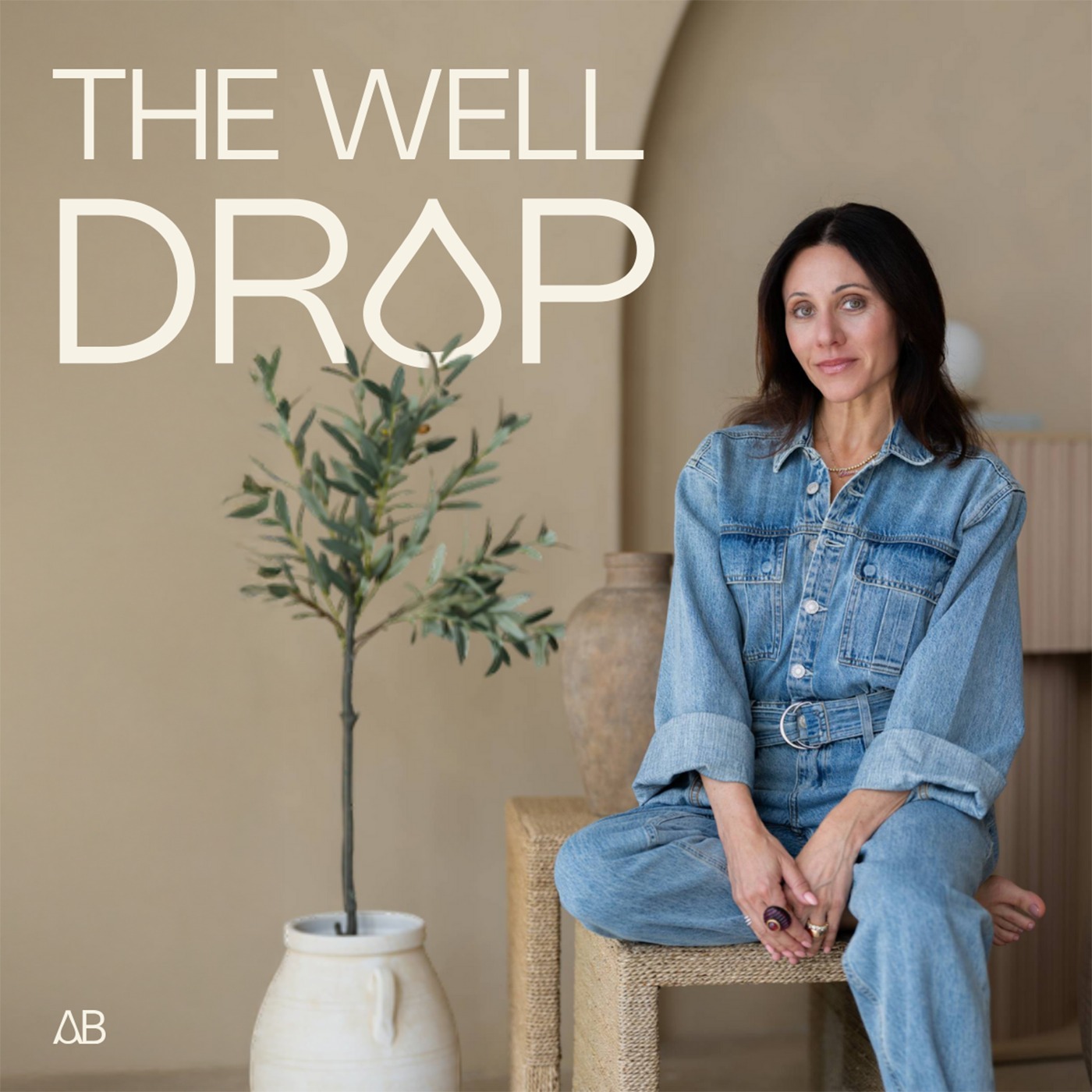
The Hidden Hormone Disruptors Affecting Women at Every Age - Dr. Lindsey Berkson (Episode 132)
About this episode
Hormone health has become more confusing than ever. Women are doing everything they can to eat well, exercise, and support their bodies through perimenopause and menopause, yet many still struggle with fatigue, brain fog, stubborn weight changes, inflammation, and symptoms that never seem to improve. So what are we overlooking?
In this episode, I sit down with Dr. Lindsey Berkson to explore why hormone health has become more complicated and why looking only at hormone levels may leave important questions unanswered. We get into the broader forces shaping how hormones behave, the reason some women respond differently to the same plan, and what may need to be considered before assuming the answer is simply more testing, more supplements, or a higher dose.
Dr. Lindsey Berkson is a nutritionist, functional medicine clinician, hormone researcher, bestselling author of more than 20 books, and a pioneer in women's hormone health. For decades, she has educated both healthcare professionals and patients on bioidentical hormones, endocrine disruption, environmental medicine, and healthy aging, helping reshape the conversation around women's health.
What's Discussed
02:11 Why hormones act as the body's communication system and influence nearly every tissue in the body
16:19 How endocrine-disrupting chemicals can interfere with healthy hormone function
19:41 Why hormone changes are becoming more common in younger women
31:23 The role water quality and everyday environmental exposures play in hormone health
42:10 Dr. Berkson shares her personal breast cancer and hormone replacement journey
47:28 Why estrogen became one of the most misunderstood hormones in women's health
01:03:01 How to find knowledgeable hormone providers and become a stronger advocate for your own health
If you have ever wondered why supporting your hormones feels more complicated than it should, this conversation will help you better understand the bigger picture and the practical steps you can take to support your health.
Sign up for The Well Drop Newsletter: Check out The Well Drop approved products and brands at amberberger.me/products
Find out more about Amber Berger:
Website: http://thewelldrop.com
Instagram: @thewelldrop
Find More From Dr. Lindsey Berkson
Website: drlindseyberkson.com
Instagram: @dlberkson
Memberships - www.drlindseyberkson.com/membership
Agile Thinking Substack - https://drlindseyberkson.substack.com/
Biotics Products - https://drlindseyberkson.com/bioticsproducts/
Everything Breast Cancer - CME/Professional/Non-Professional Editions
Everything Hormones (CME Course) - https://drlindseyberkson.com/everythinghormones/
Hormones: Vilified to Vindicated (Course) - https://drlindseyberkson.com/v2v/
Oxytocin Medicine - https://drlindseyberkson.com/oxytocinmedicine/
THE WELL DROP
[SPEAKER_02]: Here's something I know about you. [SPEAKER_02]: You are not short on information, and you definitely know a lot. [SPEAKER_02]: Yet, you're still not feeling the way you want to feel. [SPEAKER_02]: That's not a U-problem. [SPEAKER_02]: That's a foundation problem. [SPEAKER_02]: And here's the reality. [SPEAKER_02]: There has never been a clear roadmap for this chapter of midlife. [SPEAKER_02]: Until now, I built the well-drop because I was hired of piecing it together, too. [SPEAKER_02]: I was tired of
[SPEAKER_02]: protocols that were never built for this body at the stage in the season of life. [SPEAKER_02]: So I built the roadmap every Sunday, one drop lands in your inbox, one habit, one clear upgrade, just for where you are right now. [SPEAKER_02]: No noise, no overwhelmed, just what actually moves in needle. [SPEAKER_02]: You don't need more information, you need to build a wellness lifestyle for midlife. [SPEAKER_02]: That's it. [SPEAKER_02]: Subscribe at theweljoff.com or click the link in the show notes right now before this [SPEAKER_02]: You forget.
[SPEAKER_02]: I'll see you inside.
[SPEAKER_03]: Hello and welcome to The Wild Drop with me, Amber Berger, a podcast for Wellness Meet Simplicity, empowering you to own your wellness, starting at home. [SPEAKER_03]: Each episode we dive into things we wish we were warned about and explore practical street forward strategies designed for busy days like you. [SPEAKER_03]: Whether you're juggling meetings, running errands, or managing family life, I'm here to help sift through the noise and show you how integrating wellness into your daily routine can be simple and stress-free.
[SPEAKER_03]: find out how by tuning in to today's well-drapped.
[SPEAKER_04]: A lot of women in their 40s, they served a few off. [SPEAKER_04]: So for me, I was starting to feel a little bit tired. [SPEAKER_04]: I had, you know, brain fog. [SPEAKER_04]: That went beyond, I always thought it was mommy-brain, but then when it got to the point where I was like, not able to find my phone or my keys or my sunglasses and then I find them on my head, I realized, [SPEAKER_04]: that there was something that was changing. [SPEAKER_04]: And I love that you have a great line from when I saw you speak, because at that hormones rule the show.
[SPEAKER_04]: So what do you mean by that? [SPEAKER_04]: And why are they so much bigger hormones than most of us even realize? [SPEAKER_00]: Mind you, you can't ask this of any of your doctors
[SPEAKER_00]: They have not been trained in hormones hormones have been off the academic menu for 25 years. [SPEAKER_00]: So all the doctors in practice now unless they're really much older have not had any training in hormones. [SPEAKER_00]: And it's human, very human to be down on what you're not up on. [SPEAKER_00]: So if you go ask your OBGYN or your primary care doctor, if hormones are for you, you're up to get the wrong answer. [SPEAKER_00]: So you haven't got to keep that in mind. [SPEAKER_00]: They don't know anything.
[SPEAKER_04]: I just lost right there, my job. [SPEAKER_04]: I mean, I think every woman it needs to like hear this. [SPEAKER_04]: And I'm just going to put that on loop. [SPEAKER_04]: Think you look for even saying that. [SPEAKER_04]: Because we don't even realize that, right?
[SPEAKER_04]: when you start to hit a certain age and your hormones start to change, you're not sure if they're changing the first place you go is your doctor, right? [SPEAKER_04]: So that's like a huge gap that's though, like how does a woman even know who to turn to? [SPEAKER_00]: So this is the story of why hormones rule your physiologic Wi-Fi. [SPEAKER_00]: And you know how exasperating it is. [SPEAKER_00]: So I'm at my computer now. [SPEAKER_00]: I have a
[SPEAKER_00]: if I were to open it in the morning, and my Wi-Fi was down, I can't get anything done. [SPEAKER_00]: You're done. [SPEAKER_00]: You can't get anything done. [SPEAKER_00]: Hormones rule your physiologic Wi-Fi. [SPEAKER_00]: So for many, many years, except for the father of gone ecology, Lee on Spiroth, who wrote in his books that everybody was leaned on that does women's health. [SPEAKER_00]: He had a big and broader understanding of hormones, but it [SPEAKER_00]: into the academic trenches.
[SPEAKER_00]: But your body works on signals, kind of like Meg Ryan and Tom Hanks, you've got mail. [SPEAKER_00]: The one cell sends another cell email and you've got mail. [SPEAKER_00]: So what sends most of that email to your genes and your genes aren't just designer genes that look great with butt lifts, but it's the genes that hold all the archival information of your mom and dad, your grandfather, grandfather, great-grandfather, great-grandmother. [SPEAKER_00]: It contains the informational archival information that's set up to tell yourselves what to do.
[SPEAKER_00]: We have many signaling molecules in the body, but hormones are the main genetic signaling molecules. [SPEAKER_00]: And we used to think that hormones mainly signals reproductive and sexy stuff like pregnancy and what you're talking about period postmenopause antipause, but and we thought that they singled mainly with the old lock and key theory. [SPEAKER_00]: So a hormone, which would be the key, would signal into a lock, which would be the receptor, and that was called genomic signaling because it's signal for genes, not the designer, but lifting genes, but the archival information, genes.
[SPEAKER_00]: Then in the last 10 years, we discovered that, and we discovered that receptors, by the way, didn't just live in reproductive tissues like [SPEAKER_00]: But that receptors live for example in the lungs. [SPEAKER_00]: And we've done experiments where patients with severe COVID, even men are in the ICU with severe COVID. [SPEAKER_00]: And the ones that get injections of progesterone, two times a day versus the ones that only get standard of care without progesterone, have less complications because progesterone receptors line that total lungs.
[SPEAKER_00]: And they help with repair of the lungs. [SPEAKER_00]: And you have hormone receptors in the kidneys, and in the bones, and in the brain, [SPEAKER_00]: Your autonomic and your vagal nervous system, we have receptors everywhere. [SPEAKER_00]: So our understanding of hormone, email was that it was going broader and broader to more and more physiologic tissue. [SPEAKER_00]: But 10 years ago, we discovered that hormones signal with out receptors to all cell membranes. [SPEAKER_00]: Every single cell has a fatty or a triglypid membrane.
[SPEAKER_00]: We now know that hormones signal [SPEAKER_00]: every single cell in your body. [SPEAKER_00]: And signaling the covering of the cell, the cell membrane. [SPEAKER_00]: So hormones signal everything. [SPEAKER_00]: They signal the gums in your mouth. [SPEAKER_00]: They signal your esophagus. [SPEAKER_00]: They signal your skin. [SPEAKER_00]: They signal your hair follicles. [SPEAKER_00]: They signal everything. [SPEAKER_00]: And then two years ago, I just want to finish this one thought.
[SPEAKER_00]: Just to make the whole picture, two years ago, we discovered Eureka that hormones
[SPEAKER_00]: without cell membranes and they can go directly and do other cells like mitochondria or microglia that clean up and protect the neurons in your brain. [SPEAKER_00]: So hormones rule the roost. [SPEAKER_00]: They affect all tissues, all body systems. [SPEAKER_00]: No doctors have been trained in this at all. [SPEAKER_00]: Let alone perimenopause and menopause medicine. [SPEAKER_00]: So that's why Dr. David Brownstein and myself
[SPEAKER_00]: continuing medical education courses for MDs and nurse practitioners to get trained providers. [SPEAKER_00]: And there's a few other institutes that are doing some really great jobs too. [SPEAKER_00]: And we try and train providers on this enormity of hormone health for answering many issues with everyone else that's listening their health because most doctors in practice accepted
[SPEAKER_00]: Don't know that. [SPEAKER_04]: So that's why these conversations are so helpful and it makes sense why there's so many and it can affect people so differently because when your hormones are changing it can affect people on the cellular level differently, right? [SPEAKER_04]: We're all individual human beings and everyone is makeup is a little bit different and I guess most doctors what happens is like find people start [SPEAKER_04]: chasing down the wrong path trying to solve for something rather than realizing maybe let's start with the hormones first and then maybe those symptoms was sort of calm down.
[SPEAKER_04]: Have you seen that in your practice? [SPEAKER_00]: Well there's nuances though. [SPEAKER_00]: The problem is we live in a very toxic environment that's kryptonite to our hormones. [SPEAKER_00]: And so we get chemicals stuck in those receptors chemical stuck in because a lot of these chemicals are lipophilic or love fat some of them are water soluble and so you know it's different they're not all stuck in fat but many of the chemicals in today's water air food placenta and me out of fluid they stick in receptors.
[SPEAKER_00]: they stick in the membranes, they stick deep inside tissue. [SPEAKER_00]: So even though you get a Dutch test, a serum test and everything looks great, it doesn't mean that the hormone can be functional, that it can really get into the receptor, into the membrane and work. [SPEAKER_00]: So detox. [SPEAKER_00]: and getting the bad stuff out. [SPEAKER_00]: So I wrote one of the very first books on Endocrine Disruption that came out in 2000 published by McGraw Hill. [SPEAKER_00]: And based on that book, I was invited to be a distinguished Hormone scholar at the very first environmental estrogen think tank at Tulane University and Xavier universities.
[SPEAKER_00]: And I got to hang out with [SPEAKER_00]: The scientists who discovered the first receptor ear alpha and the Greek alpha that alpha is the first letter. [SPEAKER_00]: So the first receptor was alpha. [SPEAKER_00]: The second was beta. [SPEAKER_00]: Now we have a lot more estrogen receptors. [SPEAKER_00]: But the problem is hormone. [SPEAKER_00]: So it's not just identifying it. [SPEAKER_00]: If you don't get these chemicals out of you. [SPEAKER_00]: A lot of young women by taking hormone replacement.
[SPEAKER_00]: Hyperreactor. [SPEAKER_00]: They get these on reactivity symptoms that we have not seen.
[SPEAKER_00]: 54 or 55 years in one way or another and I've been testing hormones in my patients since the mid 1970s with 24 hour urine tests and serum testing. [SPEAKER_00]: And we never had these problems with hormone patients. [SPEAKER_00]: And now in the last five or six years, many, many young women aren't then getting onto hormones but can't handle them well. [SPEAKER_00]: So part of the [SPEAKER_00]: Quality hormonal intervention from a physician or a provider is also adding in detox so that you know that the hormones are functional.
[SPEAKER_00]: It's not just what you test. [SPEAKER_00]: You could have perfect a urine test, blood test, salary test. [SPEAKER_00]: Those just tell you the levels. [SPEAKER_00]: They don't tell you the functionality. [SPEAKER_00]: And we don't have providers trained in that, trained in, you know, detox methods. [SPEAKER_00]: So hormones have become more complicated than ever recently, because, you know, where the only country left, I think, that sprays their food with glyphosate right before it's harvested and Stephanie Senif is one of our world experts on that.
[SPEAKER_00]: And so hormones have ended up being a little bit more complicated than we ever imagined. [SPEAKER_04]: You said something really profound to me that because you've been doing this work for so long, you're seeing the shift of how our environment is affecting a specific cellular level, especially with our hormones. [SPEAKER_04]: So would you say, because you mentioned the word detox, that for a woman who's kind of approaching, making this very menopausal stage, if she's 35 or in her 40s, what would the first thing that you would tell her that she should do that makes [SPEAKER_00]: Well, first of all, you've been mentioning a few times that Perry Menopause starts at 35 or 40.
[SPEAKER_00]: So now Perry Menopause is really starting in a fair number of women in their 20s, but no one has the knowledge to identify that. [SPEAKER_00]: Money. [SPEAKER_00]: So you have to understand that your age span is all off. [SPEAKER_00]: In fact, I was at an A-Cog meeting, the American College of Obstetrics and Gynecologists, [SPEAKER_00]: And this was 10 years ago, and they were presenting several case reports of women going and preparing menopause of 25, 26, 27, but nobody had the lens through which to look at them and even consider it.
[SPEAKER_00]: So you might have symptoms because we have, you know, so honestly, wait, wait, no, no, no. [SPEAKER_00]: So I just want to say one thing, we're seeing more and more issues of low hormones and out of balance hormones. [SPEAKER_00]: and women 15, 16, 17, 18, 19, 20. [SPEAKER_00]: H doesn't have anything to do with it anymore. [SPEAKER_00]: I'm alone. [SPEAKER_00]: There was a major paper done about 12 years ago from Harvard and General Mass, where they took. [SPEAKER_00]: I don't remember the exact number about 170 young women from 13 to 25.
[SPEAKER_00]: And many young women today all want to be seen. [SPEAKER_00]: There's a lot of pressure on us to be seen. [SPEAKER_00]: There always has been pressure in the United States for us to be sent in my era was Twiggy was the who we held up and a lot of these women were exercising a lot and they experienced many of these symptoms which are symptoms of period menopause these are women 13. [SPEAKER_00]: to 25 years old. [SPEAKER_00]: So they experienced body dysphoria, anxiety, insomnia. [SPEAKER_00]: They did bone dexascense, they had osteopeenia, they did functional MRIs, and the area of their brain that's very estrogen-dependent, the higher executive gray matter was shrinking.
[SPEAKER_00]: which is all the things of period postmenopausal symptomatology and this was in their teens. [SPEAKER_00]: So they gave half of the young girls hormone replacement and they gave half of the young girls placebo and in a very short period of time the young women on hormone replacement got rid of all those symptoms their bone started to grow. [SPEAKER_00]: their brain area started to re-volumeize and the girls that were on placebo did not. [SPEAKER_00]: And they spun off many, many papers.
[SPEAKER_00]: The very first paper was presented in a psychiatric journal because most women first present with anxiety and just mood dysregulation issues. [SPEAKER_00]: So we have to expand our understanding now that these whole things of perimenopause postmenopause those are getting in our way. [SPEAKER_00]: because hormones are under attack in the womb and in the egg in the sperm. [SPEAKER_00]: So young kids are being born with not enough hormones and elevated binding proteins. [SPEAKER_00]: That's the protein that they ride piggyback on in the blood because blood is water soluble.
[SPEAKER_00]: Well hormones are fat soluble. [SPEAKER_00]: So when Dr. Marty McCary, who was our 28th FDA head, he made a presentation in January for male hormones, but it's applicable to female hormones. [SPEAKER_00]: He said around the world younger people and this is I've been lecturing on this for years now younger people have less and less hormones and more and more symptoms from less hormones and so just like we measure for lipid and glucose at every yearly exam starting at 11 years old. [SPEAKER_00]: Everyone should be tested for hormones because you can have insufficient hormones or hormones dysfunctional early on even before your teenage years He said to start at 11 and then test them every year all your life.
[SPEAKER_00]: So we get into trouble When we use the old Definitions of Perry menopause mostly in the 40s 10 years before you go into menopause. [SPEAKER_00]: That's the old definition, but you know hormones are in it under attack [SPEAKER_00]: from the egg and the sperm. [SPEAKER_00]: Inside the womb, we've got endocrine disrupting compounds in the placenta. [SPEAKER_00]: The average American woman, when her amniotic fluid is tested, is Mount Sinai, did a cedar Sinai tested. [SPEAKER_00]: And I wrote about this in hormone deception.
[SPEAKER_00]: They have an average of 300 chemicals in the amniotic fluid. [SPEAKER_00]: So the babies are being born having hormone issues. [SPEAKER_00]: So I just wanted to expand this. [SPEAKER_00]: We've not realized that we should be testing hormones on 11-year-olds. [SPEAKER_00]: And then they can actually have something similar to period menopause. [SPEAKER_04]: Yes. [SPEAKER_04]: No, I really appreciate that because I do agree. [SPEAKER_04]: I mean, we're going off of from my generation to think of when did the shifts happen.
[SPEAKER_04]: And that might be I'm 46. [SPEAKER_04]: So that might be from my generation. [SPEAKER_04]: But I am seeing, you know, my daughter just turned 12. [SPEAKER_04]: So it's a perfect time. [SPEAKER_04]: Thank you for mentioning. [SPEAKER_04]: I will be checking her hormones. [SPEAKER_04]: But I do see friends with teenagers. [SPEAKER_04]: And they're not connecting it yet to hormones, but I'd be curious if they tested their hormones, what their levels may be, because a lot of kids right now are being put on GOPs.
[SPEAKER_00]: well kids don't have the same IQ that they used to have a study just came out this last week I think where they're passing us a T test, but they can't read and they have no math skills. [SPEAKER_00]: You know, we have less intelligent kids, less kids that have inquiry and part of them there's it's multifactorial of course, but a lot of that could be hormones because your hormones have a lot to do with your IQ. [SPEAKER_00]: And so hormone health is under attack. [SPEAKER_00]: We don't have providers that know how to test for it.
[SPEAKER_00]: We have old systems, you know, usually are reproductive milestones. [SPEAKER_00]: That's what we're talking about is reproductive milestones. [SPEAKER_00]: You know, when you start, [SPEAKER_00]: not abulating as regularly in Perry menopause and when you go into menopause, but those used to be hardwired, but they're not hardwired anymore because of the toxic environment of what's happening prenatally and before birth and then of course, even during the years when the brain is being developed and the babies on the floor and there's dust that's filled with chemicals on the floor, so in my book hormone deception.
[SPEAKER_00]: Which was published as I just said years ago, and there were three books that came out informing the public of endocrine disruption, and we came out all within three months of each other. [SPEAKER_00]: Our stolen future hormonal chaos in my book hormone deception, and the last third of my book is all about how do you get this stuff out of you at how do you do exposure, because most of the exposures in your home, exactly what you said, [SPEAKER_00]: And you have a lot that you can do to get this stuff out of you.
[SPEAKER_00]: And in fact, I designed a product that gives you really easy weekend detoxes. [SPEAKER_00]: And I just got invited. [SPEAKER_00]: I just got back from Europe where I lectured at two different gynecologic conferences because the gynecologist used my products. [SPEAKER_00]: to treat their patients, so one of them is was an infertility specialist with IVF Center. [SPEAKER_00]: And she was very frustrated at the poor pregnancy rate, and IVF patients, and they're all aware. [SPEAKER_00]: I thought that Europe had a lot less chemicals, but when I was in Belgium and Holland and Paris, they were saying how toxic it was over there.
[SPEAKER_00]: Absolutely. [SPEAKER_00]: They took 30 patients and just gave them my detox protocol, which is really simple, and took another 30 patients and gave them IV to get pregnant, and they got 28 out of 30 patients pregnant with my products that cost, you know, I don't know, 60 bucks, 80 bucks a month, where the IVF was multiple thousands of dollars. [SPEAKER_00]: And then they had another gynecologist saying, no one's responding to treatment like they used to. [SPEAKER_00]: They're all exhausted.
[SPEAKER_00]: their anxious. [SPEAKER_00]: So I've been using your products and it's making before I do anything else. [SPEAKER_00]: And that's why they invited me to speak there. [SPEAKER_00]: And I didn't even know that they were doing these open ended. [SPEAKER_00]: They weren't randomized trials or controlled, but they were open ended. [SPEAKER_00]: I had no idea. [SPEAKER_00]: So I got invited and I was going to speak, but I was first sitting in the audience listening to this. [SPEAKER_00]: And that's how important detox is.
[SPEAKER_00]: And it doesn't have to be that
[SPEAKER_04]: What does detox mean to you? [SPEAKER_04]: Is it sounds like you would say you start? [SPEAKER_04]: Should everyone do a detox? [SPEAKER_04]: Everyone's got a detox. [SPEAKER_00]: We live in a dirty environment 24, 7. [SPEAKER_00]: And as much as you can do, but you've got to do it regularly, just like you do a multi. [SPEAKER_00]: So I designed these products to take every day, but I designed it in a way that you can also do detox weekends. [SPEAKER_00]: And actually, I didn't come up with the detox weekends, one of my medical doctors that purchased more of my products than anybody else, I was amazed at how many cases she purchased a month.
[SPEAKER_00]: And I co-ed the formulated these with biotics research because they're the most scientific we based on the neutral, suitable company and them and standard processes of the two oldest with their both celebrating their 50th year. [SPEAKER_00]: And when the FDA wants research, they go to biotics because there's nine PhDs there that
[SPEAKER_00]: So, what you can do is just do a detox weekend and I called up the doctor and said, how come you're buying so many cases of my products and she's the one with pellet hormone doctor and I had this problem where you first insert the pellets and the hormone levels go high and everyone's static. [SPEAKER_00]: And then the hormone levels drop kind of dramatically, and I'm getting calls everyone wants to script to take them to the next insertion appointment. [SPEAKER_00]: So she said, I just used your data.
[SPEAKER_00]: I started to use detox weekends where I gave receptor detox for twice a day, Saturday and Sunday. [SPEAKER_00]: Just Saturday and Sunday, and she said, I've never had a problem again. [SPEAKER_00]: The hormone stay level and then hormone balance and protect us. [SPEAKER_00]: There's many things in it, but one of the designs is to keep your hormones more zen more level, so she was using hormone balance and protector in the week and receptor detox on the weekends and she never had anyone color up again complaining that their hormones didn't last till the next insertion and so then I started working with it.
[SPEAKER_00]: I just saw her at the peptide conference. [SPEAKER_00]: In fact, she was there that got a college is was there too. [SPEAKER_00]: So hormone health now today, it's nobody's fault, it's not the hormones fault, it's man's greed and everything we put in pumped into the environment. [SPEAKER_00]: It goes hand in hand with keeping yourself as free of those chemicals. [SPEAKER_00]: So reducing your own exposure at home with your food, with personal care products, with especially filters on your shower.
[SPEAKER_00]: Most of the much of the exposure comes from shower filters, shower water. [SPEAKER_00]: and then um love that you see that you know it's a it's a combo job now and what doctors trained in this you know there's no no doctors you know unless they go on out of their way and God bless those ones you've gone out of their way because there are some quality doctors but it's you know we have millions and millions of women who want to get well in this country and we don't have [SPEAKER_00]: thousands and thousands of adequately trained doctors in the specific way.
[SPEAKER_00]: So it's an exciting time that it's a demanding time because it's hard on patients once they start getting savvy with this, well, who do I work with? [SPEAKER_00]: And there's a lot of misinformation [SPEAKER_00]: even from gynecologist on social media to just a tremendous amount of misinformation. [SPEAKER_00]: It's very confusing time. [SPEAKER_00]: Very confusing. [SPEAKER_04]: It's being earmongering. [SPEAKER_04]: Right.
[SPEAKER_02]: I'm taking a quick moment to share something with you because the number one question I get asked is where do I even start lucky for you you don't have to figure that out because I already did the work for you and I've built it over the last 10 years it's called the well drop blueprint. [SPEAKER_02]: No prep, no planning, just open your email every morning for 14 days and get one habit, one clear upgrade that tells you exactly what to do that day. [SPEAKER_02]: That's it. [SPEAKER_02]: Here's your permission slip.
[SPEAKER_02]: It's never too early and it's also never too late to start. [SPEAKER_02]: The women doing this right now range from the early 30s to their 80s because building is solid wellness foundation works at every age. [SPEAKER_02]: And the sooner you start, the faster you will feel the difference. [SPEAKER_02]: The reality is, women are doing great things, but off a rocky foundation. [SPEAKER_02]: The blueprint is your starting point. [SPEAKER_02]: It's simple, it's clear, and delivered to your inbox.
[SPEAKER_02]: Go to the wilddrop.com right now or click the link in your show notes. [SPEAKER_02]: Open Tomorrow's email. [SPEAKER_02]: It's your starting point to building a wellness foundation that helps make everything else you do work better. [SPEAKER_02]: Upgrade your wellness right now.
[SPEAKER_04]: you get something really interesting. [SPEAKER_04]: It's for me upgrading your water at home is my number one first move. [SPEAKER_04]: Tell us why the shower filter that you just mentioned is a big deal for a woman. [SPEAKER_00]: So when I was writing hormone deception, I realized how important water was because there's some in your shower. [SPEAKER_00]: First of all, you have hot waters, your pores are opening up. [SPEAKER_00]: So whenever coming out,
[SPEAKER_00]: And there's tri-hallow methods, which create carcinogenic products, and then there's endocrine disruptors, there's heavy metals, and none of our water treatment plants today in 2026. [SPEAKER_00]: None of them are designed to remove metabolites of pharmaceuticals and birth control pills and hormone pills. [SPEAKER_00]: So you get all that, all of these synthetics and metabolites in your shower unless you have a filter. [SPEAKER_00]: So I help design and Santa Fe where I wrote that book, the first reverse osmosis water system because there was such a need for it.
[SPEAKER_00]: But because [SPEAKER_00]: It takes out all the minerals. [SPEAKER_00]: We designed it to add calcium and magnesium back under the sink. [SPEAKER_00]: Yeah. [SPEAKER_00]: But you can do it by just taking minerals in, but you have to be very careful if you're on our oh water reverse osmosis water. [SPEAKER_00]: It takes everything out of you, the chemicals, but also your minerals and minerals stabilize your heart. [SPEAKER_00]: And in fact, [SPEAKER_00]: When you get older, the big dreaded issue is a fib.
[SPEAKER_00]: You don't want to get a fib. [SPEAKER_00]: You might need a pacemaker. [SPEAKER_00]: You might be more at risk of heart attack or stroke. [SPEAKER_00]: And what protects the heart against a fib are minerals and arrow rinsus minerals out. [SPEAKER_00]: So you have to test your minerals once a year for a few years when you're on a red blood cell levels of minerals. [SPEAKER_00]: Because you want to make sure that you're doing a good job. [SPEAKER_00]: of taking minerals and not just taking them but absorbing them because it's one thing to swallow a pill but it's another thing to make sure you get it inside the red blood cell where should do its duty and you know red blood cell zinc is like 20 bucks it's not a lot of money but these are things it's like a whole way of approaching medicine that just is a different way but it's based on
[SPEAKER_00]: And it doesn't even have to be that you live in a country like I was looking yesterday because I was watching love is blind Italy and everyone on there was thin and I go oh my god no one is there's no other country that didn't have one or two people that are a little more had a little more meat on them and so I looked it up and [SPEAKER_00]: The adults in Italy have the lowest rate of obesity in the industrial world. [SPEAKER_00]: But the kids are now eating as poorly and in a sedentary and they have the highest rate of obesity.
[SPEAKER_00]: So fat cells hold onto these chemicals like nobody's business. [SPEAKER_00]: And the problem is part of the reason it's harder to lose weight in 2026 than it was in 1976.
[SPEAKER_00]: It's based on our understanding of Bruce Blumberg, who I worked with at Tulane, and then I interviewed him on my podcast, any wrote a book called Obesigence. [SPEAKER_00]: And he took one chemical, and it was tributaline that used to be painted on the bottom of boats, so barnacles and things didn't stick to the boat and damaged the boat. [SPEAKER_00]: Just one chemical, and he would take a pregnant rodent and expose, so all fish has tributaline in it.
[SPEAKER_00]: lives to them. [SPEAKER_00]: And he took this one chemical even though we live in a chemical super many chemicals and he exposed the pregnant rodent to the same dosage that most of us get by eating a few fish meals a week. [SPEAKER_00]: And all of these chemicals have effects that are transgenerational. [SPEAKER_00]: So the next generation born to the pregnant mom's exposed to the one chemical tribunal in [SPEAKER_00]: And the next generation was obese with no exposure for next generations with no exposure they all continue to be obese and he compared fasting them for four days to animals that had not been exposed in euro or in the womb.
[SPEAKER_00]: So the animals exposed in unero that didn't need for four days went down to skeletal. [SPEAKER_00]: They had, you know, a small little tiny animal that has a very high metabolic rate will lose weight in four days, none of the four generations by fasting for four days lost anything. [SPEAKER_00]: So he called chemicals in the environment, Obisigenic. [SPEAKER_00]: In other words, they make your fat cells nasty. [SPEAKER_00]: I wrote a whole article on this. [SPEAKER_00]: You could Google it for free in the towns and letter.
[SPEAKER_00]: You can put in Burke's and B.E.R.K.S.O.N. [SPEAKER_00]: and fat cells, and it'll give you this whole background and the citations of all of this. [SPEAKER_00]: And how to try and reboot your fat cells. [SPEAKER_00]: But a big part of it is getting this nasty stuff out of you, which we can. [SPEAKER_00]: Like we even learned recently that plastics can be moved more [SPEAKER_00]: rapidly out of our colon with kimchi and fermented vegetables. [SPEAKER_00]: There's a study that came out in 2026 showing this incredible gift of fermented vegetables.
[SPEAKER_00]: So we can get it out of us. [SPEAKER_00]: But today's isness is that our world is dirty. [SPEAKER_00]: It's making our hormones and our fat cells and our fat cells make hormones too. [SPEAKER_00]: Dirty. [SPEAKER_00]: And it's making everybody so exasperated because we're not getting the same responses we used to gain. [SPEAKER_04]: I think people are working so hard that being really good things just in the wrong order for say because I think they like you said you need to start at home.
[SPEAKER_04]: And then it sounds like your sort of opening my eyes that the next step also would be to do this detox through your problems. [SPEAKER_00]: And then usually, and they can do other detoxes. [SPEAKER_00]: It's not like mine's the only detox show in town. [SPEAKER_00]: I just know mine really well. [SPEAKER_00]: And we slew the planet for really clean in constituents. [SPEAKER_00]: And in fact, if we can't get a clean constituent for a while, the planet, the product will be out of stock for a while.
[SPEAKER_00]: Till we wait, we test every single month, every single, let's say, for example, we have high dose of apogen and the major flavonoid and dried organic parsley. [SPEAKER_00]: And it tamps down cancer, cancer stem cells, it makes your hormones work better. [SPEAKER_00]: It lengthens your telomeres. [SPEAKER_00]: It's a power along javity food. [SPEAKER_00]: But if we find that we get in a shipment and it's got a little cadmium or it's got a little something in it. [SPEAKER_00]: We stop.
[SPEAKER_00]: We won't use that. [SPEAKER_00]: We'll send it back and we wait for another one. [SPEAKER_00]: And almost most companies don't test monthly. [SPEAKER_00]: You could call it biotics and ask for [SPEAKER_00]: I love them. [SPEAKER_00]: The analysis, the testing analysis monthly and be faxed it, but it's a lot more money to do that, and that's why our products are a little bit more expensive because you could depend on them.
[SPEAKER_04]: I think that I believe in putting your money where it's worthy, which it's so important now to make sure that something is tested. [SPEAKER_04]: Can you walk us through what does a detox look like? [SPEAKER_04]: Like what would that protocol be for a woman? [SPEAKER_00]: It's for receptor detox twice a day on Saturday and Sunday. [SPEAKER_00]: That's it. [SPEAKER_00]: And try and eat organic. [SPEAKER_00]: That's it. [SPEAKER_00]: It's the easiest detox there is. [SPEAKER_04]: It's like just like, I love thinking of things.
[SPEAKER_00]: It is a detox, but you want to try and eat organically and you want to, you know, try and reduce getting the bad stuff into and optimize getting the bad stuff out of you, but there is a combination of products in there that help healate or claw to select and work for claw to keep claw the stuff out of you. [SPEAKER_00]: And that's the most simple [SPEAKER_00]: effective detox. [SPEAKER_00]: So one of the things I do now is I mentor medical doctors and nurse practitioners and a lot of people I mentor are gone ecologists to talk about these things so they sign up for a number of sessions for me to go overall this to help them from my point of view to see if it works with their point of view for their patients and I keep hearing over and over again how it's changed their practice.
[SPEAKER_00]: that patients are really getting a response because that's the biggest angst today is that women keep complaining I do this, this and this and nothing works. [SPEAKER_00]: And so that detox is extremely simple and depending on how much a person weighs and how serious their illnesses right now I mainly consult with breast cancer patients. [SPEAKER_00]: That's who I've been focusing on for quite some time. [SPEAKER_00]: And during the pandemic, I set up a breast cancer program at a center in Naples, Florida at Dr. [SPEAKER_00]: Pro Motors, old clinic.
[SPEAKER_00]: And so if I might get a breast cancer patient and depending on what time she is in her treatment, because we find the patients that get [SPEAKER_00]: stay the safest, live the longest, that's your goal, right? [SPEAKER_00]: Stay safe, live long, prosper like Captain Kirk used to say. [SPEAKER_00]: The best is doing the best of allopathic care mixed with the best of functional and a great of care. [SPEAKER_00]: If you don't cut out that tumor, you're cutting, you're shooting yourself in the foot.
[SPEAKER_00]: So we combine the best of both worlds, but if they're [SPEAKER_00]: on in certain parts, timing of their treatment will maybe do receptor detox every single weekend for a month and then maybe two weekends after that if there are over 300 pounds because you have a lot more fat cells, these chemicals love fat cells, you have a much higher body burden of these chemicals, but you have to be careful because the detox and we add some other things
[SPEAKER_00]: that you can get a little tiny six so we give them instructions about how to minimize your detox when you're getting the stuff out of you, not feel so badly. [SPEAKER_00]: Some people are absolutely healthy. [SPEAKER_00]: They just want hormone optimization and they only need it. [SPEAKER_00]: We do the detox for a week prior to their initiation of hormones, then we maybe do receptor detox weekends for one weekend out of the [SPEAKER_00]: So it varies depending on what the patient, the condition that they're coming in with and the goals that they're presenting to you that they want to achieve and the severity, you know, larger bodies need more supplementation.
[SPEAKER_00]: Yeah, especially fast soluble vitamins. [SPEAKER_00]: You know, like vitamin A vitamin D if a patient is 325 pounds, you need double or triple the dosage you would recommend to somebody who is smaller because their fat cells dilute. [SPEAKER_00]: Um, the fat soluble supplement. [SPEAKER_00]: So there's these nuances and nutrition that when I got my master's in nutrition years ago, you know, we didn't know all these things. [SPEAKER_00]: And now we just keep adding more information.
[SPEAKER_04]: Now, what are your thoughts on it tells us a little bit about hormones and your personal journey with hormones. [SPEAKER_00]: I think it's so I'm not going to go into everything, but you know, I'm going to be 78 in a few.
[SPEAKER_00]: months. [SPEAKER_04]: I mean, anyone who's looking at the video right now and you look like you're 40. [SPEAKER_04]: I mean, look at these. [SPEAKER_04]: Wow. [SPEAKER_04]: So this is unbelievable. [SPEAKER_00]: Well, I want you to support. [SPEAKER_00]: So people ask me, what do you do? [SPEAKER_00]: And I answer honestly, what don't I do? [SPEAKER_00]: I do anything. [SPEAKER_00]: My mother was given the model compound of endocrine disruption as the fickle finger-fade would turn out.
[SPEAKER_00]: I wrote the book, hormone deception, before I knew I was a victim of the very issue of the phenomena. [SPEAKER_00]: I had no idea that my mother was injected twice in the first trimester with diaphos to best draw, that [SPEAKER_00]: Nickname is DES. [SPEAKER_00]: That now is our model compound in all the offspring exposed, especially in the first trimester, which is your most vulnerable time of exposure. [SPEAKER_00]: Those offspring are our canaries in the mind of what goes on with endocrine disruption.
[SPEAKER_00]: When I wrote the book, I was interested in hormones and interested in our dirty environment giving us a different new given of hormones. [SPEAKER_00]: But I didn't [SPEAKER_00]: that my mother was given that, and I had been eating every, I've been a yoga teacher, had been doing detox, I've been eating organically since I'm 17, 16, 17 years old. [SPEAKER_00]: I got the memo, I don't know why other people didn't get the memo when I did, but and then all of a sudden when hormone deception came out and I started working at Tulena, I was diagnosed with breast cancer.
[SPEAKER_00]: What the hell? [SPEAKER_00]: I was doing everything right. [SPEAKER_00]: I got breast cancer. [SPEAKER_00]: What the hell? [SPEAKER_00]: Well, it turned out long story short is very too long to get into. [SPEAKER_00]: by a lot of, so I was working at a think tank with the scientists who unveil the endocrine disruption story or the dialysis cholesterol story and when I started then I got diagnosed with kidney cancer and both the cancers were very rare and in fact my breast cancer had never been seen in the United States before I was the first American citizen with this histologic type.
[SPEAKER_00]: It's a milder type
[SPEAKER_00]: it's a long story because then then it was really interesting they want to be to be treated like everybody else had been treated and I was like well how do you know that's right if you haven't dealt with this before and there's a long story that I go into in the beginning of so we just finished a 20 hour course called everything breast cancer [SPEAKER_00]: which was, what can you add to alipathic care? [SPEAKER_00]: Like if you go through chemo, what can you easily do going through chemo that will reduce your side effects like mucocitis, which is a horrible side effect and improve your patient survival outcomes?
[SPEAKER_00]: There's things you can do that are in the peer review, but oncology is good as it is and as bad as it is. [SPEAKER_00]: It's still operating like out of the 1960s where it doesn't incorporate a lot of what's in the science and done in human studies that can make people's lives better so before I died in my expiration date is up because who knows when that might be I'm getting older. [SPEAKER_00]: And I wanted to pass this on and I went on hormones two years after I'd breast cancer because the science clearly showed me that there was no science that said the breast cancer patients even ear positive couldn't take hormones and it was really misinformation yet again.
[SPEAKER_00]: So I one of the things that keeps me like I am as I've been on hormones for 30 years and I've been on hormones take that in. [SPEAKER_00]: 30 years, and it's the same time eating organic, doing a lot of exercise. [SPEAKER_00]: I exercise more than most people. [SPEAKER_00]: Friends are my dear dear sisters of my heart. [SPEAKER_00]: They're not aging the same way. [SPEAKER_00]: And when the final analysis of the women's health initiative came out in the original author said, hey, women on estrogen, they get less breast cancer, 23% less.
[SPEAKER_00]: And if you are on hormones and then you do get breast cancer, [SPEAKER_00]: The big big payoff is that you reduce your risk of dying from it by 44% nothing has ever been as breast-protective as estrogen. [SPEAKER_00]: So this false press release that went out by Jacques Rousseau, the Chief Investigator of the Women's Health Initiative, was BS McCarrie admits all this in his second chapter in blind spots where medicine gets it wrong and what this means for your health. [SPEAKER_00]: He tells this story.
[SPEAKER_00]: in detail of how it was a lie, but why would a lie supersedes the science? [SPEAKER_00]: Where's that disconnect there? [SPEAKER_04]: So, my conditioning runs so deep, because I've worked with a lot of women and try to educate them and explain about the study. [SPEAKER_04]: I said, even a commoner that's not a doctor or scientist if you read it, you would totally see how the subset was not even like a great study. [SPEAKER_04]: Like it just means in common sense, [SPEAKER_04]: that fear is so ingrained and it so sad that they miss out.
[SPEAKER_00]: But in that final reanalysis, they said, hey, there's nothing so breast protective as estrogen. [SPEAKER_00]: Nothing, nothing, nothing and every single estrogen is breast protective. [SPEAKER_00]: I still hear a lot of experts say tremor and we'll give you breast cancer. [SPEAKER_00]: So all of the estrogens were statistically protective against breast cancer in the largest study we ever had, which was our 10 million NIH study published in 2024 in menopause. [SPEAKER_00]: They looked at 10 million American women 65 and older.
[SPEAKER_00]: And a million, 500,000 Ron hormones, estrogen, and then progesterone, if they didn't have uterus, some of them didn't get progesterone, which is really another sad thing, too. [SPEAKER_00]: But, and they tracked them. [SPEAKER_00]: This is 10 million women. [SPEAKER_00]: They had their medical records. [SPEAKER_00]: I'm on Medicare. [SPEAKER_00]: If you have Medicare, but most women on bio-identical hormones don't admit to their doctors. [SPEAKER_00]: They are if they're getting them from compounding pharmacies.
[SPEAKER_00]: So we don't have a complete [SPEAKER_00]: But this was the largest study ever run and every single estrogen, statistically, reduce the risk of breast cancer, pre-emerine first, ester dial, next in all other forms of estrogen, after that, every estrogen. [SPEAKER_00]: And then we learned any hormone is better than no hormone except for synthetic progestons. [SPEAKER_00]: But estrogen is your friend and women are scared to death of it and certainly breast cancer patients, if you're eat, I was the air positive to beat the band.
[SPEAKER_00]: I've been on hormones. [SPEAKER_00]: I did have a better player, a cancer, but then someone who has, for example, like triple negative, which is a more of an ominous diagnostic cancer. [SPEAKER_00]: But there are so many things to do in hormones, help breast cancer patients, and there's no breast cancer patient, none, none, none that shouldn't be on testosterone and why because it signals the second estrogen receptor, which is anti-cancer anti-inflammatory. [SPEAKER_00]: at everything breast cancer, the world's expert who's done 30 years of research, Rebecca Glazer, I think she should get the Nobel Prize, proving that testosterone reduces the insulin-subress cancer and testosterone low levels of endrogens, put your risk of getting breast cancer, and but she does give it with an estrogen blocker.
[SPEAKER_00]: We have a little difference of opinion, but we still came out of that symposium. [SPEAKER_00]: adoring and caring for each other a lot, but the reason testosterone, it is many reasons white maelness protects femaleness, but testosterone signals the second estrogen receptor which protects us against cancer. [SPEAKER_00]: Then at two lane, I got to hang out with Yonaki Gustafson, who discovered that receptor. [SPEAKER_00]: And on the 21st day of that receptor, he wrote a paper plea to clinicians.
[SPEAKER_00]: Why aren't you using molecules that will signal the second estrogen receptor to treat breast cancer, color, rectal cancer? [SPEAKER_00]: The worst of the brain cancer is glioblastoma on and on and on. [SPEAKER_00]: But there's such a bias against hormones. [SPEAKER_00]: Hormones are misunderstood women are made to be afraid and they miss out. [SPEAKER_00]: People are always saying to me, what do you do? [SPEAKER_00]: What do you, so in my birthday, I got all my friends together, my favorite restaurant.
[SPEAKER_00]: And I had a few new friends and they were going, how is it that you look the way you look? [SPEAKER_00]: Now mind you, I still do some, you know, some aesthetic stuff. [SPEAKER_00]: It's not like I normally do some of that. [SPEAKER_04]: So beautiful, really. [SPEAKER_04]: I mean, I think every woman who's looking at you right now, like they would aspire to each like you. [SPEAKER_00]: I mean, I think it's the energy, but I would say to them, well, foundationally, it's hormone replacement and they would say, I don't want that shit.
[SPEAKER_00]: Yeah.
[SPEAKER_00]: They have been making so afraid and it's shooting yourself in the foot and and with the way the chemicals in the environment work not only are you missing the hormones you normally lower with aging your own hormones that you have left don't work right because of chemicals, which make them hard to function so you have an amount of functionality. [SPEAKER_00]: It's a complete clusterfuck. [SPEAKER_00]: It is. [SPEAKER_00]: That says I'm glad you said it. [SPEAKER_00]: I'm glad you said it.
[SPEAKER_00]: I'm glad you said it. [SPEAKER_00]: I'm glad you said it. [SPEAKER_00]: I'm glad you said it. [SPEAKER_04]: I'm glad you said it. [SPEAKER_04]: I'm glad you said it. [SPEAKER_04]: I'm glad you said it. [SPEAKER_04]: I'm glad you said it. [SPEAKER_04]: I'm glad you said it. [SPEAKER_04]: I'm glad you said it. [SPEAKER_04]: I'm glad you said it. [SPEAKER_04]: I'm glad you said it. [SPEAKER_04]: I'm glad you said it. [SPEAKER_04]: I'm glad you said it. [SPEAKER_04]: I'm glad you said it.
[SPEAKER_04]: I'm glad you said it. [SPEAKER_04]: I'm glad you said it. [SPEAKER_04]: I'm glad you said it. [SPEAKER_04]: I'm glad you said it. [SPEAKER_00]: I'm glad you said it. [SPEAKER_00]: I'm glad you said. [SPEAKER_00]: I'm glad you said. [SPEAKER_00]: I'm glad you said. [SPEAKER_00]: I'm glad you said. [SPEAKER_00]: I'm glad you said. [SPEAKER_00]: I'm glad you said. [SPEAKER_00]: I'm glad you said. [SPEAKER_00]: I'm glad you said. [SPEAKER_00]: I'm glad you said. [SPEAKER_00]: I'm glad [SPEAKER_00]: enjoy and I'm I'm I'm at two years from 80 and I'm kayaking up to 10 miles a week and I'm having tons and tons of intimacy better intimacy than I've ever had in my life and I'm not even married.
[SPEAKER_00]: We're going to have that for that episode.
[SPEAKER_04]: How do we find like who is supposed to lead us in this? [SPEAKER_00]: Oh, that's such a great question. [SPEAKER_00]: So there are three programs that train providers and providers that graduate from those programs, they're still not guarantees that they got their act together. [SPEAKER_00]: But it's a direct message. [SPEAKER_00]: It's a really good direction. [SPEAKER_00]: And there's three programs I recommend. [SPEAKER_00]: One of them is the menopause method by Dr. David Rosensweet that he has every Wednesday, a regular grand rounds and every Thursday of another grand rounds for the graduates of his menopause method and he now has available and I'm trying to get it set up on a website.
[SPEAKER_00]: We'll see if we can work it out, but he's got a medical doctor with licentures in every single state of the union and you can call up through a QR code and get someone trained by him and they his hormones that he's invented are all based in a whole oil where it's all other creams have a little bit of benzene glycol, does it glycol benzene the efferget benzene glycol. [SPEAKER_00]: They have a little bit of chemical in them to make them soluble, but he used a natural oil. [SPEAKER_00]: And he's the best.
[SPEAKER_00]: Now, of all things, he started the Institute of Biola identical hormones. [SPEAKER_00]: I'm on the board, but he was one of my doctors when I at breast cancer is 32 and a half or not. [SPEAKER_00]: So we've known each other for three plus decades. [SPEAKER_00]: He's one of the smartest, most authentic men I know. [SPEAKER_00]: He's [SPEAKER_00]: Save my butt when I had breast cancer. [SPEAKER_00]: They told me I didn't need chemo because of my more favorable prognosis with what I had They didn't know didly with Lisa turned out because they'd never treated it before.
[SPEAKER_00]: That's a whole long story So I ordered my own chemo black market chemo from Switzerland called Ukraine, and I needed somebody to administer to me when it came to me And I ended up getting IVs of nutrients and ozone and things from his office and then we would add [SPEAKER_00]: in a different vein, the chemo. [SPEAKER_00]: And so I was there for a lot of visits and got to know him well and our relation. [SPEAKER_00]: Now three years later, he got into the hormone space and I was already in the hormone space and now both of us have died deeper and deeper in the hormone space and we're very good friends.
[SPEAKER_00]: His business is making it available via telemedicine, no matter where you are, [SPEAKER_00]: and I'm getting a QR code, we're getting a QR code set up to make that possible. [SPEAKER_00]: And then there's another training academy called the BHRT Academy owned by Donna White, who's a very close girlfriend and colleague of mine. [SPEAKER_00]: And she also has an incredible training program of which I'm a big part of that. [SPEAKER_00]: And then I have my own training program with Dr. Brownstein that's 16 hours of CME evergreen online.
[SPEAKER_00]: And you can still get 16 hours of CMEs for MDs nurse practitioner's pharmacist and nature pass. [SPEAKER_00]: It's still online. [SPEAKER_00]: It's called everything hormones. [SPEAKER_00]: And you could see that if you scroll down on the first page of my website, Dr. Lindseybricksand.com, D-R-L-I-N-D-S-E-Y. [SPEAKER_00]: B-E-R-K-S-O-N-D-R-K-S-O-N-D-R-K-S-O-N-D-R-K-S-O-N-D-R-K-S-O-N-D-R-K-S-O-N-D-R-K-S-O-N-D-R-K-S-O-N-D-R-K-S-O-N-D-R-K-S-O-N-D-R-K-S-O-N-D-R-K-S-O-N-D-R-K-S-O-N-D-R-K-S-O-N-D-R-K-S-O-N-D-R-K-S-O-N-D-R-K-S-O-N-D-R-S-O-N-D-R-K-S
[SPEAKER_00]: at the level of a young woman, if you're really trying to use hormones to anti-age you, if you just want to get rid of symptoms, that's another way of using hormones. [SPEAKER_04]: Just symptom one, what is good estrogen level and testosterone level? [SPEAKER_00]: That's all crap. [SPEAKER_00]: That's all crap because it varies totally. [SPEAKER_00]: And those testosterone levels are meant to be all worried about hormones so much. [SPEAKER_00]: We learn in functional medicine and we can't say this enough, treat the patient, not the laboratory.
[SPEAKER_00]: So those levels, you know, you don't want so little. [SPEAKER_00]: Esther, do you can say you wanted over 85, you want over 125. [SPEAKER_00]: But a lot of it is.
[SPEAKER_00]: how do you feel what your dexus scans say and I don't even know if I totally believe in dexus scans anymore. [SPEAKER_00]: So my where I go to see ED, they're trying to get me to get vaccinated. [SPEAKER_00]: They're trying to get me to do dexus scans to take a mammogram. [SPEAKER_00]: So I was lecturing in port Saint Lucy to a group of doctors and there were [SPEAKER_00]: When I walked into the room, I had my person, my bag, and the AC wasn't working right, so there was this level of moist sheen that I didn't see on the floor, and I took a step into the room, and I just slid across the room, and there was nothing to hold on to, and I completely fell.
[SPEAKER_00]: Let's go. [SPEAKER_00]: Let's go. [SPEAKER_00]: On my shoulder, my elbow and my hip. [SPEAKER_00]: Anyway, I was stunned. [SPEAKER_00]: I let lay there for a half hour. [SPEAKER_00]: I called the front desk downstairs and they said you have to call a hospital. [SPEAKER_00]: We don't have anything to do with that. [SPEAKER_00]: So I just waited to get my wits about me. [SPEAKER_00]: And I never got black and blue. [SPEAKER_00]: I never broke anything. [SPEAKER_00]: Wow. [SPEAKER_00]: I care more about that than a Dexus scan result.
[SPEAKER_00]: Like what is the resilience? [SPEAKER_00]: How much energy do you have? [SPEAKER_00]: How much resilience? [SPEAKER_00]: How fast you recover from whatever issue? [SPEAKER_00]: How well is your brain working, so you can rattle, rattle, rattle. [SPEAKER_00]: And there's all kinds of tips to aging like this. [SPEAKER_00]: It's not just hormones. [SPEAKER_00]: And there's things you can easily add into your life. [SPEAKER_00]: In fact, I'm giving a talk on all my secrets of longevity at the epic symposium.
[SPEAKER_00]: November 6th, I think it is in Sugarland, Texas. [SPEAKER_00]: And then I fly out that morning to lecture for the libertarian party here in Austin with Dell victory. [SPEAKER_00]: And I just wrote an article for their very first journal. [SPEAKER_00]: that they're launching from the libertarian party, and they wanted me to write an article called the lie of estrogen and how generations of women have missed out. [SPEAKER_00]: So I just sent that in and it just got approved. [SPEAKER_00]: So you're not alone if you've been fearful of estrogen, all women have been made to be fearful of estrogen, but it's a lie, it's a lie, it's a lie, it's a lie.
[SPEAKER_00]: So, and I'm a living proof of that. [SPEAKER_04]: really truly that's like the best examples that you're living and anyone that's like can hear this. [SPEAKER_04]: I mean the energy in your voice, the lifestyle that you lead, you are proof that when you live around this lifestyle for I mean now you're three decades in with the hormones too paired in addition. [SPEAKER_00]: Right after breast cancer, right after ER positive breast cancer. [SPEAKER_04]: That's when you have foundations that you will thrive.
[SPEAKER_04]: Right. [SPEAKER_04]: I feel like it looks like it's set you free that [SPEAKER_04]: You know, other people's parents who may be your age, like their hobby is doctors appointment. [SPEAKER_04]: It's like, that's just, that's not living to me. [SPEAKER_04]: But I do want to make fun of for that. [SPEAKER_00]: There are some patients due to the complexity of their case that I do think they, in my opinion, they need to be off estrogen. [SPEAKER_00]: for a period of time, estrogen deprivation, and then it added back in.
[SPEAKER_00]: This is part of the issue, and some people, like Dr. Zuba, feel you should never be deprived of estrogen, but there was a theory that started in the 1940s by Dr. Adow, and the theory was, if we noticed that women seem to do better on [SPEAKER_00]: breast cancer treatments, if they're menopausal, so they didn't have estrogen for a while because they're in that time of life where they don't have estrogen and they seem to do better. [SPEAKER_00]: So this theory of estrogen deprivation came in and then Craig Jordan, who was the pharmaceutical scientist who put Tamoxid on the map and he helped me make a lot of decisions.
[SPEAKER_00]: for my breast cancer treatment. [SPEAKER_00]: He was very kind to me. [SPEAKER_00]: And I hate that he died at 73 just this last year. [SPEAKER_00]: It was a long long loss. [SPEAKER_00]: But he wrote a big paper on how if you deprived estrogen for a while. [SPEAKER_00]: And then you reintroduced estrogen becomes a cancer killing hormone. [SPEAKER_00]: And we all have to help keep our hormones safe together in this challenging environment. [SPEAKER_00]: And it's good. [SPEAKER_00]: You're not alone if you're confused and you're not alone if you're scared.
[SPEAKER_00]: But it's time to really, life is a gift and to get the best out of living inside your body suit and really enjoy it and not just be anxious, driven and uncomfortable and fearful. [SPEAKER_00]: really enjoy what's left of this gift, part of that is hormone health. [SPEAKER_00]: And thank you for allowing me to be here today and share these words, maybe, you know, a few people could be benefited. [SPEAKER_04]: Thank you. [SPEAKER_04]: I mean, you sharing it. [SPEAKER_04]: There's so much more.
[SPEAKER_04]: We're going to have to have the happy one. [SPEAKER_04]: We're coming out a lot about that. [SPEAKER_04]: Oh, my goodness. [SPEAKER_00]: Yeah, that was my 21st book just came out four months ago, oxytocin medicine. [SPEAKER_04]: Oh, my goodness. [SPEAKER_04]: I'm talking about digestion, so we have so much more we need to dive into the work and people I think you mentioned your website where we could find you and your new book that just came out and for that reason it was number one on in Pharmacology because the 12th chapter is how to write scripts for many different conditions to compounding pharmacists to help with different conditions.
[SPEAKER_00]: So I have a sub-stack called agile thinking. [SPEAKER_00]: You can put in sub-stack agile thinking and there's free ones you can take a look at. [SPEAKER_00]: You can decide if you [SPEAKER_00]: want to purchase it for to get all of them and also support me and all the work that I do because that's all a lot of work. [SPEAKER_00]: I've lots of other books out like my book Healthy Digestion in the Natural Way published by Wiley Solo over a million copies, but it was before the time they tracked the novel for a book sold and I have a book out called Sexy Brain was about how about endocrine disruptors were going to cause gender bending and it came out in
[SPEAKER_00]: the whole trans and gender-bending thing came out and it was a harbinger of all of that. [SPEAKER_00]: So. [SPEAKER_00]: I tried to educate, because I've learned all this through my own life and of course through schooling and patients, but all of us want to enjoy this gift of life, and it's harder to do, but the truth is you can, it's not true that there's no hope. [SPEAKER_00]: We could even remediate this planet if we had the regulation and bills passed and money to do it. [SPEAKER_00]: There's always hope.
[SPEAKER_00]: And no matter where you are, even if you're triple negative fighting for your life, there are things to do that maybe the doctors you're working with as well intentioned as they are might not know if you so there's we are launching everything breast cancer in three different programs. [SPEAKER_00]: the third program is for the everyday patient at a greatly reduced price. [SPEAKER_00]: So we're giving you a discount code to get even another $100 off of that of people. [SPEAKER_00]: Because cancer is coming, it's right here, there's an epidemic of cancer.
[SPEAKER_00]: I just had a, [SPEAKER_00]: a patient who was 16 years old with breast cancer and no bearing cancer patient of 20. [SPEAKER_00]: And now she's 26 and has had no hormones for six years and is desperate. [SPEAKER_00]: She's like a postmenopausal woman and no one will give her hormones. [SPEAKER_00]: So it's here. [SPEAKER_00]: It's here. [SPEAKER_00]: So if you want to prevent getting cancer or if you have cancer, we give you pearls and a lot of it came from what I've learned in my last three decades because I want to stay safe too.
[SPEAKER_00]: I want to be well too, and that's, so that's, it's all about, I mean, we'll put that nation in this life count for sure. [SPEAKER_04]: So I always like to close out our, uh, episode saying what is one symbol thing of woman today, you'd like to be per with that she can do or her hormonal health. [SPEAKER_00]: Don't be afraid of them. [SPEAKER_00]: The fear is generated falsely. [SPEAKER_00]: Don't buy into the false, the false fiction. [SPEAKER_00]: Think of it as false fiction. [SPEAKER_00]: Don't be fearful of your own hormones and brace them, care, take them, learn how to keep them.
[SPEAKER_00]: safe. [SPEAKER_00]: The last third of my book or mom deception takes you by the hand and helps you learn how to reduce exposure in your home. [SPEAKER_00]: Your office, your supermarket cards, that's where you get most of your exposures, not all of them. [SPEAKER_00]: And you can get my products to give you an easy breezy way of helping, you know, you have to keep it up, though, because we're exposed 24-7 in our air food and water in homes.
[SPEAKER_00]: all based in science. [SPEAKER_00]: So don't feel like there's no hope. [SPEAKER_00]: And don't live in fear. [SPEAKER_00]: Please live in love. [SPEAKER_04]: Great. [SPEAKER_04]: Well, that is a wrap. [SPEAKER_04]: A huge thank you to you, Dr. Gerard Smith, for sharing so openly and making science easy for us to understand and to really get our minds thinking outside the box. [SPEAKER_04]: I think every woman we all need to reach your book. [SPEAKER_00]: And if you've got teenagers, you've got to get their hormones tested once a year, just like everything else.
[SPEAKER_04]: That's a bullet point, right? [SPEAKER_04]: That's a big message. [SPEAKER_04]: That is a monster bullet point. [SPEAKER_04]: We will put you linked to your website and everything in the show notes. [SPEAKER_04]: And thank you so much, and please. [SPEAKER_04]: I mean, like, it makes your view. [SPEAKER_04]: We're going to put you like on the picture all the time. [SPEAKER_00]: Because we did a whole bunch of fun pictures for everything breast cancer out. [SPEAKER_00]: But I don't have your, can you text me or email me?
[SPEAKER_00]: Your email or text so I can send you some fun pics. [SPEAKER_00]: But I love that. [SPEAKER_00]: But I just don't want people to fear estrogen. [SPEAKER_00]: She is your friend, not your phone. [SPEAKER_00]: Love that. [SPEAKER_00]: Thank you so much. [SPEAKER_00]: Bye.
[SPEAKER_04]: And that is our rap on today's conversation. [SPEAKER_04]: A huge thank you to Dr. Lindsey, Berksham for sharing so openly and making the science easier for us to all understand. [SPEAKER_04]: If you take one thing with you today, let it be this feeling good in midlife is absolutely possible when you get the right things in the right order and you clear out what's been getting in the way. [SPEAKER_04]: If this episode spoke to you, do me a favor, share it with a girlfriend who needs to hear it and hit follow so you never miss a drop.
[SPEAKER_04]: And when you're ready to stop guessing and start feeling like yourself again, come find me over at thewelldrop.com. [SPEAKER_04]: I'd love to help you keep connecting the dots. [SPEAKER_04]: I'll see you next time that you got this and I got you.
[SPEAKER_01]: The well-drop podcast and content posted by Amber Berger and Deena Wismar is presented solely for general informational, educational, and entertainment purposes. [SPEAKER_01]: The use of information on this podcast or materials linked from this podcast or website is at the user's own risk. [SPEAKER_01]: It is not intended as a substitute for the advice of a physician, professional coach, psychotherapist, or other qualified professional, diagnosis, or treatment. [SPEAKER_01]: Users should not disregard or delay in obtaining medical advice for any medical or mental health condition they may have and should seek the assistance of their health care professionals for any such conditions.
[SPEAKER_01]: This podcast is for informational purposes only and should not be considered health advice. [SPEAKER_01]: The well-drop is not responsible for any losses, damages, or liabilities that may arise from the use of this podcast.
 Apple Podcasts
 Castbox
 Castro
 Goodpods
 Moon FM
 Overcast
 Pocket Casts
 Podbean
 Podcast Addict
 Podcast Republic
 Spotify